

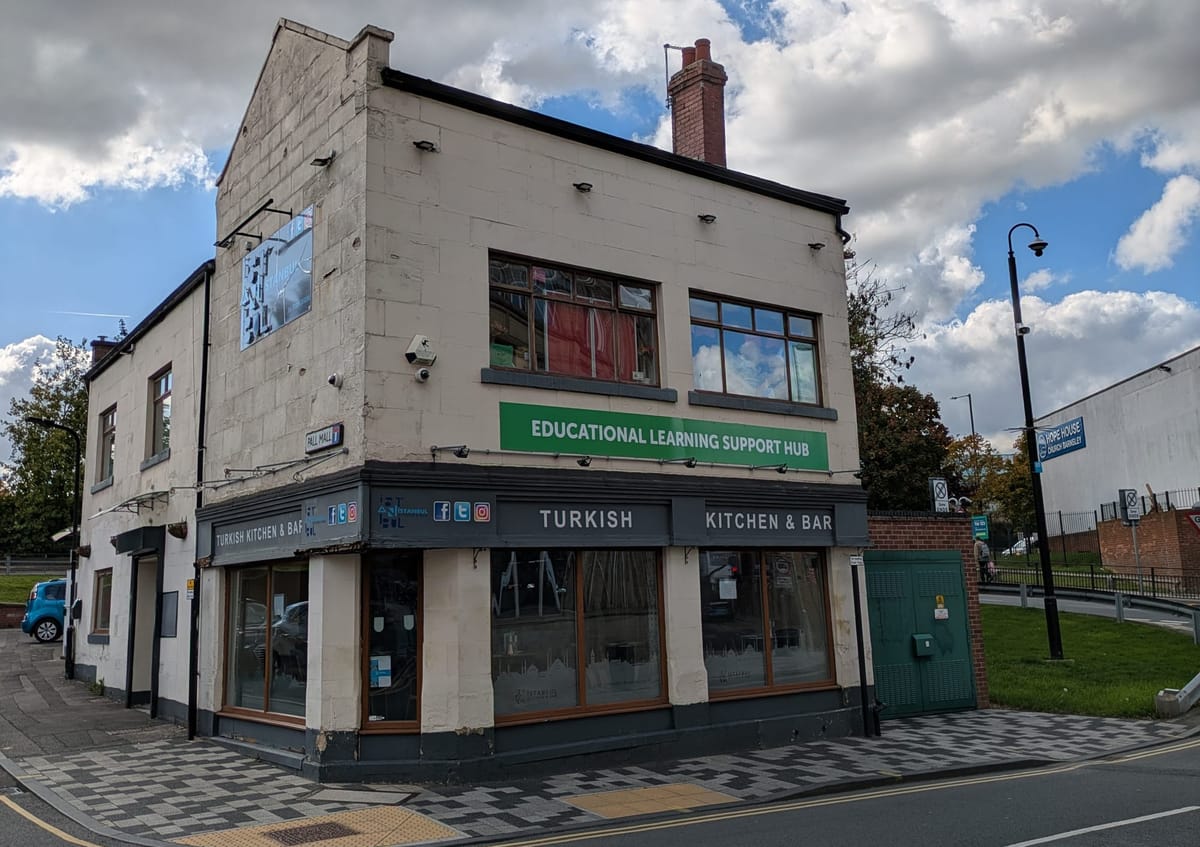
Valeria Guarneros-Meza reflects on her work alongside Barnsley's Educational Learning Support Hub, and highlights the multi-layered ways that precarity stifles community organisations. She argues that solidarity between different social groups is key for overcoming its debilitating effects.
by Valeria Guarneros-Meza
People who work precarious jobs experience low pay, insecure and temporary contracts, and a lack of legal rights like paid leave. These features of precarious jobs have wider negative impacts on people’s lives outside the workplace. For example, precarity harms their ability to maintain relationships with friends and loved ones, care for children, perform housework, or look after their own mental and physical health. This, in turn, has further destabilising effects on how people perceive themselves and how they are seen by others. Given this, precarity is not merely a form of labour. It is a multi-dimensional set of social conditions that spreads across every aspect of people’s daily lives.
It is also multi-layered. This means that when the right combination of factors occurs, such as an economic downturn or a hardening of the hostile environment against migrants, precarity can be experienced simultaneously by an individual, an organisation and broader institutions. My research in Barnsley helps to further unpack these characteristics of precarity.
Discovering Barnsley
I discovered Barnsley in 2019, when I helped with Spanish–English interpretation at a meeting between the British National Union of Mineworkers (NUM) and the Mexican Zapatista Army of National Liberation (aka Zapatistas). Both groups came together to share experiences of social injustice; in particular, they focused on how the nation-state uses violence and repression against human rights and initiatives of self-determination.
I was moved by the stories shared in this exchange and inspired by how they overcame the Global North–South separation created by geo-politics. These stories vividly illustrated the diverse ways in which global capitalism unfolds, with its tendencies to cause domination, exploitation, and abuse. I admired how these groups manage to resist or cope despite the neglect, abandonment and the physical and administrative violence they experience.
Three years later, De Montfort University made me redundant after running a financial deficit. My former employer is one of the 96 universities which are restructuring, introducing redundancies and risking thousands of jobs. After I left the university, I went through a period of depression, counselling, and job seeking, while trying to reinvent my life. It was Barnsley – the place, its history and its people – that helped me overcome my professional trauma.
Just before the university made me redundant, my research focused on how the provision of community services changes as people experience worklessness or job precarity. The NUM–Zapatistas encounter became a healing force to start my recovery. So, in 2024 I decided to do fieldwork in Barnsley. I wanted to understand how communities respond to decades of economic inactivity and precarious work. In my research, I had previously argued that such work destabilises everyday life through its impacts on people’s routines, family structure and identity. After the redundancy, I felt destabilised and needed to find an anchor in my life. I discovered it in Barnsley.
Meeting Florentine and getting to know ELSH
I heard about the Educational Learning Support Hub (ELSH) during a meeting at the Coalfields Regeneration Trust. Since it is in Barnsley, where under 4% of the population identifies as non-White British, I thought the ELSH would be led by a White-British person. After browsing its webpages, I was pleasantly surprised to learn that it was run by Florentine; a Black woman with Congolese ancestry who was born and raised in Belgium, holding a master’s degree in international education.
In the early-2000s, supported by her local church, Florentine started providing English lessons to migrants, refugees and asylum seekers arriving in Barnsley. Due to high demand and increasing operating costs, in 2019 Florentine was advised to turn her initiative into a charity.
ELSH’s mission is to provide a positive and stimulating environment for parents and young people, with particular focus on those with migration backgrounds who are not engaged in education, employment or training. The main service ELSH provides is English teaching, but as I discovered through my time volunteering with them, migrants’ lives are not only reduced to learning English. They also need to learn how to navigate British institutions and services, such as healthcare, education, work and housing.
ELSH is a place where people benefit from the small food bank that it manages in coordination with local providers, or the wellbeing sessions it runs with the modest grants it secures. ELSH also offers digital courses for people to learn or sharpen the IT skills that are needed to navigate the online British system of service provision. In the past, ELSH provided English and Maths lessons to British people, but when funding for these activities finished it could no longer offer this service. However, some natives are long-standing volunteers at ELSH, either teaching English or carrying out administrative tasks.
ELSH works in partnership with other local organisations and groups. Migrants and people with refugee and asylum seeker statuses are referred to ELSH by the local colleges, the local council and the Job Centre office to improve their English. These referrals are particularly convenient for government agencies because ELSH’s services are free of charge. ELSH has partnered with other migrant-focused organisations such as the Polska Biblioteka, Migrant Action and Feels Like Home. Through these partnerships, the services that ELSH beneficiaries can access are extended to areas such as housing, work, migration advice and leisure activities.
Because of a lack of stable funding, ELSH has moved premises over the years. When I first visited, they were located on Market Street, in the middle of Barnsley Town’s centre. They are now located in a nearby street, above a Turkish restaurant. Thanks to their easy access and welcoming environment, the ELSH premises are always busy with users coming and going, local people visiting to say hello, local shops making food donations, and service providers such as the council community development officer or the We Are Group double checking that ELSH’s needs with funding applications and digital-training courses are fulfilled.
Florentine is great at multi-tasking. She is constantly welcoming people, giving food away, charging staff and volunteers with different tasks, answering her mobile, or replying to a flurry of emails she has accumulated. But at the end of the day, she still manages to keep a smile on her face and maintain the energy to laugh at the challenges that have been thrown at her.
At first, I felt that all the simultaneous activities happening at ELSH were chaotic. However, I learned to appreciate that this is what it is like to address the emotional, social and educational needs of migrants and marginalised people. ELSH staff did not only respond to these needs with care and support, but also helped them navigate the daily complexities of migration.
When I began volunteering at ELSH, I was struck by Florentine’s resilience; but I also noticed her vulnerability and the difficulties she was exposed to. She faced heavy workloads and worked unsociable hours. She managed the uncertainty of working with migrant volunteers, many of whom were vulnerable by not knowing English or how to navigate the British service system. In addition, Florentine had to manage the uncertainty of securing funding to support ELSH’s mission.
This scenario showed me that precarity is multi-layered: Florentine, the individual, was facing difficult working conditions and dealing with her organisation’s lack of stable funding, while ELSH’s mission was being threatened by the complexity of the British service system.
Over time, I also noticed that precarity is multi-dimensional. Immersed in her daily work, I observed that Florentine’s resilience betrayed a vulnerable side. She began to seem tired and stressed, not having enough time to look after her wellbeing. The lack of funding that ELSH faced was underpaying Florentine’s work and the salary of two part-time staff. Soon afterwards, she was worrying about her future pension and the repercussions this would have upon her family life.
A brief history of post-war Barnsley
ELSH sits within the precarious context that has characterised many post-industrial towns in Britain. In 2019, Barnsley borough ranked 38th out of 317 in the national deprivation index of local authorities in England. Such a high rank reflects, among other social issues, poor education, employment and health/disability levels. This has been accompanied by the stigmatisation of ‘left behind places’, a term used by previous Conservative governments to refer to those towns in Britain which have not benefited from economic growth in the last 30 years.
After commissioning extensive research on employment, skills and education, the Barnsley Metropolitan Borough Council recently decided to implement the Pathways to Work Strategy. It primarily aims to push people away from economic inactivity and receiving welfare, a situation that is in many cases driven by ill health. In 2022, Barnsley’s inactivity rate was 23.9% – slightly above the national average of 21.5%.
This strategy is telling because it illustrates that the council has engaged in some degree of effort to respond to the demands and fluctuations of the local economy, particularly in the food, care, retail, logistics and creative sectors. However, many of these jobs remain low-paid, precarious, and classed as low-skilled.
Barnsley borough, like other areas in West and South Yorkshire, was at the centre of the 1984–1985 miners’ strikes. Barnsley’s principal towns have been shaped by the collieries, some of them dating to the 1800s, with the Goldthorpe colliery the last to close in 1995. These towns are characterised by having a high street, a library and small train station. Many of the colliery sites have been replaced by huge warehouses owned by call centres, retailers and logistics businesses.
The old housing was gradually replaced by new estates that brought British and non-British newcomers to the area, attracted by housing affordability, beautiful green landscapes and a relatively easy commute to the bigger cities of Leeds or Sheffield. Those on refugee and asylum seeker statuses tend to live in Barnsley Town or Royston. The latter is also was also cited by an ELSH user as the ‘capital of racism’. Other migrants are more dispersed. Depending on their place of work, they live across different principal towns such as Wombwell or Goldthorpe, but it is also common to find those who use their cars to commute further.
The changes in landmarks and populations are interwoven with a feeling of pride in how Barnsley contributed to the historical successes of British manufacturing during the inter-war years, a period when coal provision was key for keeping homes warm and factories and trains running. At the same time, feelings of isolation and neglect prevail due to the deindustrialisation of the post-mining years and the negative impact these changes had on people’s lives. Isolation has been accentuated by the precarity that many families experience as a result of 15 years of fiscal austerity (which has hit local government services hard), the effects of the COVID-19 pandemic, and the cost of living crisis.
In the last 40 years, people who were born in Barnsley or remain living there have experienced different types of social harm. This has prompted non-profit organisations and community groups to organise around projects of collective healing and recovery – from soup kitchens and food banks to more elaborate wellbeing projects. These initiatives clash with the hostility that migrants, refugees and asylum seekers face. Reform UK was the second most-voted party in Barnsley after Labour in the 2024 general election.
Despite this, there are pockets in the community that strive for a more welcoming and inclusive Barnsley. After the far-right riots in August 2024, I wanted to understand more about this tension. A local activist working in Goldthorpe explained that ‘the tight knit communities that mining towns created have made some people tribal and when public resources are scarce after years of fiscal austerity, people tend to overprotect the little they have left of public services and benefits they receive’. This idea helped me to reflect a bit more on the work that ELSH does.
Encountering institutional racism
Alongside other charities working with migrants and refugees, the ELSH premises, staff, and users have been subject to vandalism and racial abuse. Although South Yorkshire police are aware and respond against this type of interpersonal violence, the institutional racism that people experience in service provision has not been properly addressed by the council. As a government officer told me, ‘more than translating information of services into other languages needs to be done’.
ELSH and its partners have identified good practices that the council and other local service providers could adopt to reduce access barriers, overcome stigma, address social adversities, and promote a more positive environment towards migrants. For example, they could include migrants with lived experience in planning processes, ensure staff has cultural competency training, use community interpreters and translators, and have high aspirations for Barnsley’s migrants and people seeking sanctuary.
These efforts are an example of how the divide between natives and migrants can potentially be overcome. They can drive communities away from a trajectory leads from tribalism to racism, towards an alternative path that directs them from tribalism to the establishment of more welcoming spaces. This would involve a complex change of deep-rooted organisational practices that permeate the everyday. ELSH’s experience helps illustrate what is needed for this change to happen.
While volunteering at ELSH, I helped with fundraising. I drafted a couple of bids to calls opened by the council and South Yorkshire police. In 2022–23, ELSH’s annual income was over £50,000. This classifies ELSH as a very small charity within the overall picture of the charity sector. When I started working on one of the bids, Florentine was disappointed by her negative experience with the Lloyds Bank Foundation – Racial Equity Programme Grant. It was her fourth attempt at submitting an application with them without success.
She felt that the process was discriminatory. Although an online eligibility test was available, it did not mention that applicants must be listed in the online registration of the Office of Immigration Services Commissioner (OISC). This is a license that the government grants to organisations who provide migration advice. In order to receive this license, organisations must complete a training course and, if they want to be included in the online registration, they must pay an additional fee – which varies depending on organisations’ size and annual income. Although Florentine took the OISC training, ELSH did not prioritise paying the registration fee, which at the time was a one-off payment of £733. Florentine was not informed that the lack of registration was the reason her attempts failed until she phoned the Foundation directly to inquire about the matter.
I was stunned that the Lloyds Bank Foundation overlooked this point in the eligibility test, while using it as a criterion to reject applicants. Furthermore, they failed to communicate this omission in the previous feedback given to ELSH. This can be interpreted as an omission that shows the negative impact of a deep-rooted practice, given that the scheme was directed to organisations working with and being led by racially minoritised groups, many of which provide migration advice.
The Foundation has now rectified this omission. However, the incident shows how funders can discriminate against vulnerable charities such as ELSH, despite making efforts to improve their approach to racial inequities. This discrimination is not personal, but rooted in the daily procedures of institutions.
The bank’s experience reflects the multi-layered side of precarity by illustrating how ELSH is at the bottom of a set of disadvantaged organisations when compared to those charities that have similar aims. However, other charities tend to be better prepared and connected through infrastructure they can access by having their premises located in the bigger cities of Sheffield or Leeds.
I also prepared an expression of interest to apply for the Paul Hamlyn Foundation – Migration Fund. We were disappointed to receive a negative response from them too. They said: ‘while we recognise the importance of English lessons and employability work to support migrants to make connections and thrive in the UK, due to our limited funds this is not a current priority for us’.
Instead, their priorities focus on initiatives dismantling the hostile environment in the UK, tackling root causes of migrant injustice, building self-determination and collective power within migrant communities, and fostering solidarity between communities. Florentine was upset to read the Foundation’s response, especially because ELSH organises activities that foster connections between native local people not in education, employment or training and migrants.
I took the task of reflecting more carefully upon the Paul Hamlyn Foundation’s response to help ELSH align more neatly with their priorities. I identified three main areas of opportunity in which ELSH could do things differently. First, ELSH could think of not only creating a sense of community while people study English, but also organising activities in which students and alumni build long-lasting relationships of support and solidarity, especially when migrants and refugees stay in West and South Yorkshire.
Second, ELSH could do more in questioning the extent to which funding from the South Yorkshire police increases a sense of safety against local racist behaviour whilst disciplining the everyday life of stigmatised groups. Some academics argue that when these disciplinary interventions are directed to migrants and refugees, the hostility of border control is often enhanced. This control can prevent the formation of collective solidarities. Finally, ELSH could build a more systematic programme of activities beyond the classroom that improves the integration of both natives and migrants benefiting from its services and who are not in employment, education or training.
Unfortunately, the timing to discuss these ideas was not ideal. In part, this was because the multi-dimensional and multi-layered aspects of precarity were compounded by the 2024 August racist riots. Florentine was very busy thinking through how to secure funding after a couple of applications to the council and South Yorkshire police were unsuccessful. Then she took a few days sick leave, in my view because of the work overload and stress she was facing. Not long after, the riots took place across the country and ELSH closed its premises for a couple of weeks as a preventative measure.
This temporary closure increased the sense of insecurity that ELSH staff and students normally faced. The racist riots were a national phenomenon that filtered fear down to the local, organisational and individual levels. The sense of national insecurity was not labour-related, but it impacted the work that ELSH does. It spread out to other aspects of people’s daily lives, such as accessing food. I remember thinking how the riots had the effect of a mini-pandemic, in which ELSH staff, volunteers, and students were confined to a life indoors for a couple of weeks.
During the closure, Florentine and I held a couple of phone conversations, mostly to discuss funding and the challenge of paying rent for the ELSH’s premises. Combined with the fear and shock of rioters visiting the Wellington building a few streets away from ELSH, Florentine was disappointed to hear that the local council did not invite ELSH to be part of the recently refurbished building, which was previously the old prison. Instead, newly formed local charities were invited to work there with a subsidised rent. This news added to the sense of discrimination that ELSH members felt. However, it must be said that the council invested resources in ELSH’s initiatives and needs; one example was the time spent by a council’s community development officer to help ELSH submit a National Lottery application. Whether these aids were sufficient is an open question.
In waiting for a decision from the National Lottery, I prepared a crowdfunding campaign on the Big Give platform. Through online donations the ELSH managed to obtain over £1000, which was way below the target £8000 but was better than nothing. Coordinating this campaign required staff capacity that ELSH did not have. However, the challenge brought Florentine and I closer together. We learned from each other’s mistakes and tactics to navigate the administrative fees and technical glitches that the Big Give platform sets out to charities in offering its fundraising services.
My story and precarity
My experience in Barnsley has been important because it allowed me to carry on doing the research I used to do when I was employed. It also allowed me to feel the research more personally. During this process I learned what precarity meant for others, while experiencing precarity myself. Although the University of Sheffield offered me a visiting scholarship, I was responsible for paying the research costs.
In fact, I remained unemployed throughout most of the time that I was conducting this research. Nevertheless, the project had to be subject to the university’s research policies. While immersed in this organisational precarity, I admit that the research helped me find a purpose and regain confidence in a way that psychotherapy alone couldn't. This entire process helped me experience the multi-dimensional side of precarity in my life.
This research also allowed me to witness the multi-layered side of precarity, in which individuals, organisations and institutions overlap at the same point in time. I found myself being an independent, unemployed researcher who, as part of the research, was volunteering with ELSH to give something back. ELSH happens to be a small charity embedded in an English town with a recent history of marginalisation, worklessness and ill health. ELSH’s vulnerability is accentuated by the scarce resources that the charity sector faces in general. This is even more pronounced in Barnsley because of the limited funding provided by local authorities. In reading academic work to understand Barnsley's context, I held exchanges with academic colleagues at the University of Sheffield. I could not help noticing their exhaustion, stress and pressure. Some of them were on strike or on action-short-of-a-strike to fight against the redundancies or heavy workloads that the university imposes on them. What united these two completely different sectors was precarity.
What’s next?
In Spring 2025, ELSH was awarded a National Lottery Community Fund grant, covering core and project costs for three years. After several months passed, I visited ELSH in September. I missed Florentine, her chatter and energetic persona. I returned to present my ideas concerning the Paul Hamlyn Foundation, hoping that Florentine could pay more attention to what I had to say.
I managed to convince Florentine, but our lack of time has prevented us from further action. I offered to work with them to plan how to make these changes happen. It will not be an easy ask, given that ELSH may need to become more of a challenger to the status quo: a role that is difficult to undertake when charities firefight to keep things afloat whilst facing insecurity.
Against this backdrop, I find myself remembering the encounter between the NUM and the Zapatistas. I remind myself that the problem with precarity is that it compels individuals, groups and organisations to cope, circumvent and navigate the odds, rather than resist, reflect and seek more direct change. The latter is riskier and hence less likely for people and organisations to jump on board. Yet, the histories of both NUM and Zapatistas show that in time of crises, solidarity and awareness raising between diverse and plural groups are indispensable sources of strength for overcoming exploitation and violence.
Valeria Guarneros-Meza is a researcher at York St John University and co-founding director of The Policy Co-op, a collective that works with English communities to undertake research that generates new understandings and knowledge of people’s everyday lives. Valeria is grateful to Writing Politics and Interregnum’s reviewers for offering stimulating discussions that informed this piece. All interpretations and errors are her own.



Comments ()