

Through original archival research, Ciara Ruane unearths the forgotten story of the Bilberry Riots. By bringing back to life characters, places, and two cinematic trials, Ciara highlights how contemporary struggles over land and resources are rooted in Britain's bloody history of expropriation.
By Ciara Houghton Ruane
A common question leftists ask each other is ‘what radicalised you?'. It’s a jokey question; radicalisation is a gradual process, of course. However, I do have something of an answer to offer. Two answers.
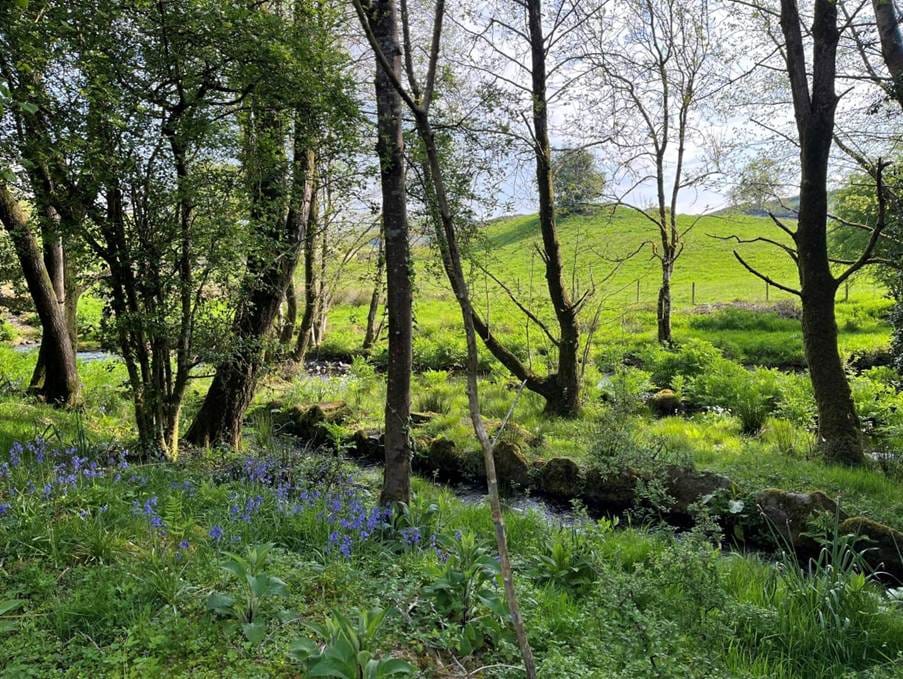
As a child, I lived in a tiny Cumbrian village called Underbarrow. Underbarrow had maybe 50 houses, a church, and a pub. It was boring as hell. The market town of Kendal was around a 20-minute drive away, and a trip to Kendal’s branch of ASDA was a treat. One thing I did like about Underbarrow was a small, picturesque creek a short walk from our house. For many years we would go there when my Grandparents visited. We’d bring a picnic, we'd paddle and fish for minnows. It was a regular spot for us, is my point. One summer day, we took our picnic and went there like we always did. After around half an hour, a middle-aged man with a plummy accent approached us. He told us that it was his land and we had to leave. ‘It’s like you’ve come to my garden’ were the words he used. Being law-abiding people, we left our spot and we never came back.
Whether this man had recently come to own the spot or whether he had owned it for all the many years we’d been coming, I don’t know. As a child of maybe 12, I forever lost access to a beautiful place where we had created many family memories because money had changed hands and a line had been drawn on a map. We weren’t inconsiderate visitors; we didn’t leave litter or fry and eat the minnow we caught. It didn’t matter: we were trespassing. We may have been trespassing for years without realising it. I don’t think I was angry at the time. There was just a quiet grief that I wouldn’t see the creek again. I learned then that money always ends up winning over what actually seems right.
Fast forward to the summer of 2024. I was facing a no-fault eviction from my rented home in Salford, where I had lived for four years. I could find little to no information on who my landlord was, just a vague business name with no online presence whatsoever. A search on the government registry of businesses only brought up the names of yet more ghostly groups and organisations. I finally found an address, a small office building on the Isle of Man, shared by around 20 other businesses. One of my landlord’s address buddies was listed in the Panama papers. I enlisted help from a union friend, and she got to the bottom of it.
My landlord was an actual Lord. He owned much of Manchester’s trendy Northern Quarter, as well as a fleet of racehorses. We were only able to confirm that he was my landlord because many of his shadow corporations were named after farms and horses his family owned. I asked to negotiate with him, but it was a dead end. I was evicted because he allegedly wanted to sell the house. When I searched for the house on Rightmove after we left, I found it wasn’t being sold. Just rented out for twice the cost.
I arrived at the conclusion that feudalism never fully ended in England. It changed its look and merged with the ‘free market’ just enough to justify its continued partial existence, but England remains a country of landowners and tenants. After leaving Underbarrow I never wanted to live in the countryside again, but I came to appreciate nature as an adult once the misdirected rage of puberty passed and I realised that my problems were, in fact, not all caused by living in the middle of nowhere. I’ve developed a love of walks – not hardcore hikes, but gentle daily strolls – and a desire to learn more about nature.
My growing radicalism became entwined with the idea of the land around us being the birthright of all human beings. Why have homelessness when we have the land and the resources to house everyone? Why have food poverty when we could cultivate everything we need sustainably? Beyond the moral consideration, it was, frankly, illogical. Our advancement as a species can’t happen if we artificially create poverty. Interested in the resources freely available in the land around me, I took up a casual interest in foraging. Partly because it’s a nice calming hobby, and partly because I see it as a rebellion against a system that insists nature must be paid for.
In John Wright’s book, The Forager’s Calendar (2020), I came across the story of the 1848 ‘Bilberry Riots’. I’d never heard of or tasted a bilberry at that point, but my interest was piqued. The short story is this: in July 1848, the same year The Communist Manifesto was first published, impoverished farmers ventured on to the recently enclosed Bradfield Dale to pick bilberries. The landowner declared that they were trespassing. They were beaten, and their harvest of berries was confiscated. The story was a short part of a section on identifying, finding, and using the bilberry. I immediately looked online for other sources about this ‘riot’, but found none. I decided to take on the responsibility and dig into the archives to seek out the full story of the so-called ‘Bilberry Riots’. Enjoy!
What is a bilberry?
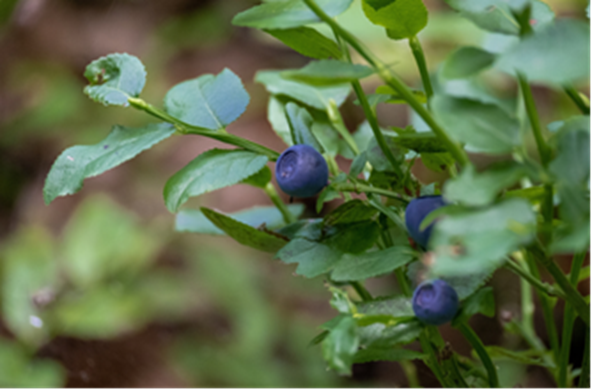
Bilberries [Vaccinium myrtillys] are common in the UK and are found across Northern Europe and Northern Asia. They flower in June and fruit in late July and August. They are a popular choice for jams and pies as well as traditional medicine, where they have been used to treat gastrointestinal disorders and diabetes. They look a lot like blueberries, only they have red flesh with a richer taste and a shape that can only be described as Death Star-like. In 1961, Folklorist Máire MacNeill explored the significance of the bilberry in the Celtic harvest festival of Lughnasa. Through interviews with Irish locals, she described a celebratory feast that included bilberries and a slaughtered bull. MacNeill wrote that ‘no custom has been more lasting than the picking of bilberries’, adding that ‘it was important that all should eat them and that some should be brought home to the old and weak who could not climb the hill’.
The West Riding of Yorkshire, 1848
Stannington, Sheffield, 1848. Benjamin and Matthew Oates are out of work. It turns out they were not farmers, but industrial workers. A census from 1851, three years after the Riot, lists them as neighbours at ‘Hangmoor side’. They were likely cousins. Matthew lived with his wife Hannah, and his occupation is listed as ‘victualler (publican) and pocket blade forger’. Benjamin lived with his mother Nancy, a widow, and his brother John. His occupation was ‘journeyman (skilled craftsman) and pocket knife forger’. His brother was doing a little better: he was a ‘pocket knife cutler master’, employing Matthew (Hatfield, 2002).
Both Matthew and Benjamin benefited from Sheffield’s growing steel industry. Knife production developed in the area during the Industrial Revolution, and Sheffield became the world’s supplier. The suburb of Stannington was a centre of production of refractory bricks for the Sheffield forges, which fuelled growth in the area. The number of homes in Stannington almost doubled between 1800–1851, fusing the small farming community with the city of Sheffield.
Despite the Industrial Revolution, work was not steadily available, nor were the wages adequate. Employers did what they have always done and sought to pay workers as little as possible. Before the days of workplace regulations and the welfare state, injury and poverty were an inevitable daily truth for the working classes. Unions existed, but many of the victories we take for granted now were yet to be won. The minutes of a January 1827 meeting of the Sheffield Society for Bettering the Condition of the Poor describe the abject desolation of the city’s workers. The description of one family’s condition is harrowing:
‘We visited a family consisting of a man, his wife, and one child, where heavy expenses have been incurred, they having lost nine children. The mother is severely afflicted with fits, which, for a considerable time after each attack, render her quite incapable of managing her domestic concerns. What makes the case more distressing is, that these fits come on most frequently when she does not get sufficient nourishment’.
The family is described as sleeping on damp straw with a thin, ragged blanket for covering. Another family was forced to sell all their belongings after the father, a pen knife cutter like the Oateses, had not been able to find work for several months. Speakers at the meeting stated that the problem was not necessarily a total lack of work, but work being unavailable for more than a few days a week.
The speaker stated that ‘there exists among the working classes in general, an anxious desire to avoid pauperism, and instances can be produced of workmen petitioning their employers so to divide what employment they have, that none might be thrown destitute’. While Britain reaped the riches of an empire and industrial dominance, the working classes who made it possible divided work as fairly as they could among themselves: this was their only means of avoiding the workhouse. This, ultimately, comes down to resources. For the working classes, labour was their only bargaining chip. Land, however, is the ultimate resource. It is vital for life, food, freedom, everything. Sheffield was situated by the ancient Yorkshire moors that were traditionally used for farming, raising livestock, hunting, and foraging. Yet just a few miles from this bounty, entire families slept on damp straw under disintegrating rags.
The common and ‘waste’ grounds in the West Riding of Yorkshire were subject to enclosure beginning in the late 18th century. The Duke of Norfolk proposed the enclosure of common lands in the area in 1787 and faced immediate opposition. On the 8th of September in that year, the Sheffield Register published a notice protesting the change, stating that:
‘several of the freeholders and inhabitants of the townships being well convinced that if such act be obtained it will be attended by very bad circumstances, they are determined to oppose the same so far as relates to their said several Townships or Districts and do hereby give notice thereof accordingly and that proper measures will, in the meantime, be adopted for opposing the said intended application’.
Despite the opposition of Sheffield locals, the law was passed in 1791. In July, a ‘violent repulse’ was staged against the Commissioners of Enclosure in the area when they attempted to draw boundaries. One man, John Bennett, was found guilty of arson and hanged. The Duke of Norfolk received 1,226 acres of the total area enclosed in the West Riding, much of it for the purpose of grouse shooting. Stannington was one of the last areas to be enclosed, the whole process taking around 14 years. For the Oateses, free access to the moors would have been a recent memory; if not for them, then for their parents and grandparents. The sting would have been fresh.
The Enclosure acts proved very convenient for the ongoing Industrial Revolution. With common ground gone, rural people could no longer turn to the land to provide for themselves. For many, mills, forges, and factories became the only options. The rural population of the UK dropped by 40% in the 19th century and poverty became rampant. The nearby woods where citizens collected firewood became private property; entry meant trespass. Going to the moor to hunt fowl became poaching. They could no longer fish in the river, pick mushrooms in the fields, nor gather materials to repair their homes in the hills.
As the overall population grew in size, the number of jobs in the countryside shrank due to the mechanisation of agriculture and domestic industries like cotton spinning being outcompeted by factories. In these dire economic circumstances, many were compelled by the risk of starvation to move to burgeoning urban areas in search of work. Those that remained in the country were mainly reliant on poorly paid farm work to survive. An advocate for enclosure wrote in 1800: ‘when a labourer becomes possessed of more land than he and his family can cultivate in the evenings … the farmer can no longer depend on him for constant work’ (Thompson, 2013). The threat of the workhouse added an extra boon for employers. Workers would settle for starvation wages to avoid the shame.
Karl Marx observed the effect of enclosure on the working classes first hand. In Capital Volume 1, he referred to the enclosures as ‘decrees by which the landowners grant themselves the people’s land as private property, decrees of expropriation of the people’. He added that ‘the expropriation of the mass of the people from the soil forms the basis of the capitalist mode of production’. Land is the primary means of production. The fact that the enclosures acts occurred at the height of British colonialism is no coincidence. Seizing land for the Empire allowed those in power – capitalists, military, the clergy, etc. – to exploit both its resources and the labour of the indigenous population. Colonialism further accelerated the Industrial Revolution and the need for wage labourers at home. Cotton picked by slaves in the North American plantations was spun by workers in Manchester for a pittance. Even something as mundane to the modern mind as tea and coffee was grown in British colonies, providing workers with the caffeine that made 12-hour days in the mills and forges survivable.
Enclosure was one of the major ways the English aristocracy consolidated their wealth with such totality. They still own vast swathes of the country today, despite the perception that their power has waned. Along with the chokehold of the aristocracy, the Industrial Revolution provided a whole new class of industrialists with previously unimaginable wealth. Inequality was not new, but through the acceleration of British manufacturing it found new and innovative ways to squeeze more blood out of the working poor. As Sheffield became synonymous with steel forges, families who had worked the land for centuries found themselves working for an entirely new master.
Benjamin and Matthew Oates’ steel knives were made possible by Industrial Revolution-era advances in smelting techniques and the availability of fossil fuels with which to smelt. Steel production became cheaper and easier, and accelerated mechanisation. By the mid-1800s, Sheffield made 90% of Britain’s steel products, and the outbreak of the Crimean war in 1853 required an uptick in steel production to provide British soldiers with weapons. Perhaps it was the Crimean war that put the Oateses back in the forges. According to the newspaper report of the fateful bilberry pick in 1848, both were out of work.
31st July 1848 – The picker’s account
In the archives, I found two sides to the story of what happened on the day the Oateses walked to Bradfield moor to pick berries. One by the pickers themselves, defended in court by Mr. Eyre. The other by the land occupier Jehu Ibbotson, represented by Mr. A. C. Branson. The Oateses’ trial was reported on in the Sheffield Independent on Saturday August 12, 1848. It took place on Friday 11th at Sheffield Town Hall, and was presented to the Mayor, the Rev. J. Hand, and R. Bayley, Esq.
One commonality on both sides is that the Oateses weren’t the only people there. One fellow picker was Ann Holdsworth, a Stannington neighbour. She testified that the group had been out on the moors foraging for three hours. Ibbotson and his men appeared on the scene, called them thieves and robbers, and attacked them with sticks. In response, the 14 or 15 foragers, who were initially armed with nothing but baskets, picked up stones to defend themselves. Ann then fled in terror and walked three miles barefoot across the moors, having been too scared to pause and put her shoes on.
Another Stannington neighbour, John Armitage, had also joined the party. A razor blade grinder by trade, Armitage had been without work for three weeks. He recounted that he saw Ibbotson and his men approach with bludgeons, which were produced in court. He backed up Ann’s assertion that Ibbotson called the pickers ‘rogues’ and ‘thieves’ before shouting ‘now my lads, all together’ and attacking. Armitage was knocked to the ground with a bludgeon, and his attacker was disarmed by picker Thomas Grayson. According to Ann and Thomas, it was only then that the pickers threw stones.
Cross examination was carried out by Mr. Branson. Armitage testified that he didn’t know of any other ‘rows’ that had taken place about access to the Moors. Brogging Moss, where the skirmish occurred, was around 12 miles from the village of Stannington. He said that the Moors closest had scarce bilberries, so the trek was necessary. Thomas Grayson, the man who disarmed Armitage’s attacker, was a fellow blade grinder who had been out of work seven whole months. For him, the fruit was worth travelling 12 miles on foot for. In court, Grayson identified the man who had attacked John Armitage and the cudgel he used. He supported the account that there were only around 14 pickers, all unarmed. Following the confrontation, they made their way off the Moors. Mr. Eyre rested his case after Grayson’s testimony.
Jehu Ibbotson’s account
So far, not exactly a riot, at least by our modern standards. The pickers seem less like rabble-rousing political actors and more like desperate people taking advantage of the fruit that the land they lived on gave freely. A legal dictionary published in 1835 defined a riot as ‘the forcible doing of an unlawful thing by three or more persons assembled together for that purpose’. The dictionary even specifies that ‘a tumult, with a view to pull down a particular house, or lay open a particular enclosure, amounts at most to a riot’. In the pickers’ account, Ibbotson is painted as the aggressor causing a ‘tumult’.
Jehu Ibbotson doesn’t appear to be from an aristocratic line. His surname was common in the area among both labourers and wealthier families. He is named as the tenant of Bradfield Dale in voting records, renting the land at a rate of £30, and described by the newspaper as occupying a ‘considerable’ area of land. He was likely a tenant of the Earl Fitzwilliam, the owner of much of the moors. He rented the Dale for sheep grazing, bilberries, and grouse shooting. The ‘riots’ took place in the run up to the ‘glorious 12th’, a key date in the grouse hunting calendar even today. The date became significant thanks to the 1831 Game Act, which specified a shooting season starting on the 12th and ending December 10th.
Grouse shooting became a fashionable sport because of the aristocracy. In his book Who Owns England?, Guy Shrubsole describes how the sport was popularised by Queen Victoria and remains a favoured pastime of both the landed gentry and the nouveau-riche. Just as Ibbotson was a tenant farmer who improved his social standing with game hunting, we still have modern-day landowners using grouse moors to blast their way into the elite. The practice has been disastrous for the ecology of the moors. Grouse are ground-nesting birds, and landowners hoping to increase their numbers have decimated predator populations and plant life on higher ground. This has released carbon in the atmosphere, disrupted the food chain, and increased risk of flooding on low grounds.
Ibbotson’s maintenance of the land for farming and grouse had the desired effect. He was able to occupy a respected position in the area. He had been appointed a ‘Guardian of the Poor’ in 1839. This was a year-long appointment that originated from 1579 Poor Laws. Ibbotson would have had authority over how resources like food and monetary aid were distributed, including the funding of workhouses. Throughout my research, I found his signature on many bills from the time, paying for aid for the poor and distributing money to local organisations.
He didn’t have as much to work with as he should have, however. Poor Law amendments brought in in 1834 sought to reduce the cost of relief offered to the poor and discourage them from applying for it, much like how modern politicians promise to ‘reduce the welfare bill’. The poor didn’t need discouraging when it came to asking for help, many considering the workhouses to be a fate worse than death. The ‘relief’ offered by the workhouses ‘was administered in such a strict, mean, and humiliating fashion that people would rather die than become paupers. If they would not become paupers, then they must either find a job, however hard and poorly paid, or emigrate, or die’ (Hatfield, 2004).
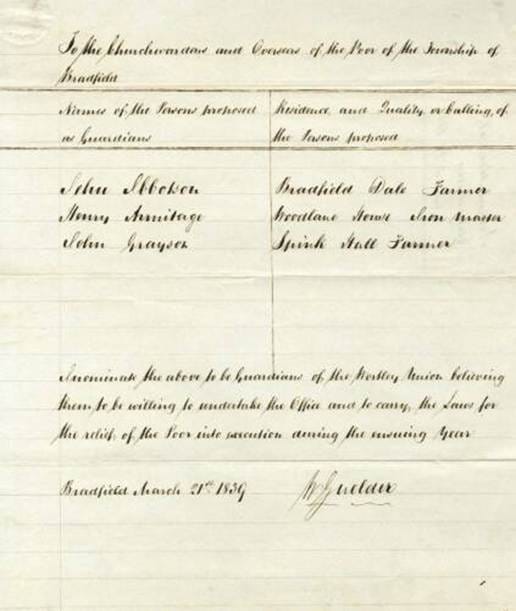
Poor Law amendments also sought to give the distribution of relief over to local parishes, overseen by ‘guardians’ like Jehu Ibbotson. Overseers conducted assessments of the poor to determine what they did and didn’t deserve. Alongside this position, Ibbotson was a named member of the Bradfield Association for the Prosecution of Felons. In the times before the national police force, many areas created these entities to fund local justice proceedings. Jim Sutton explored the phenomenon in Protecting Privilege and Property: Associations for the Prosecution of Felons. Sutton indicates that members of these associations were mostly comprised of local aristocracy, landowners, clergy, and other wealthy men.
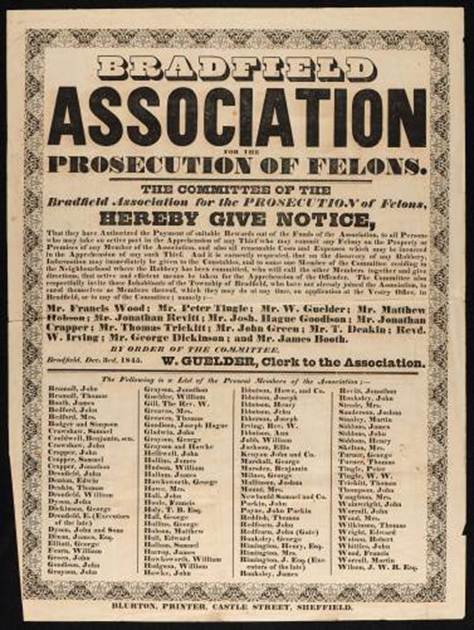
Existing membership records demonstrate clearly that these groups were not representative of the area’s population, with new members being admitted only with the consent of existing members. Certain professions were excluded if they were deemed too likely to be victims of theft, or entry could be refused if no land was owned in the parish. Some associations did assist non-members, but membership wasn’t a possibility for most in the parish. All of this meant that Ibbotson had an ability to arrest and prosecute those who ‘trespassed’ on his land that others lacked.
In the run up to the 31st of July, Ibbotson claimed that his animals and property had been subjected to many attacks, which may explain his alleged heavy-handedness. He testified that a lot of this damage had been done ‘under the pretence of gathering bilberries’ and he had ‘resolved to put a stop to it’. Having around 300 sheep grazing on his lands, he noted that the sheep were greatly disturbed during bilberry season. He testified that he knew ahead of time that there would be a considerable gathering on the 31st, and travelled to meet them at 5:30 AM to protect his property. Ibbotson described meeting not 14 or 15 berry pickers on the Dale, but a crowd of 300, dwarfing the group of nine men he walked with. He said that ‘at first they were in parties of various numbers, but when they collected […] they made about 300’. At Brogging Moss, they stopped in their full ranks and collected stones.
‘My good men,’ began Ibbotson, according to his account of the story, ‘what do you mean to come trousselling my land over in this sort of way, driving everything away from it?’
‘Is thy name Ibbotson?’ replied Matthew Oates, the pocket knife maker. Ibbotson confirmed it was.
‘Good’, continued Oates. ‘Thou’rt t’man we want. Who has thou with thee there?’
‘They are two or three of my men.’
‘That’s right. We’ll do for you altogether.’
After this tense exchange, the pickers began to hurl their stones at Ibbotson and his men. Matthew struck the first blow, hitting Ibbotson’s shoulder. Ibbotson’s men retreated, bloody and frightened. The pickers fled, shouting unheard slogans loud enough to echo across the moors.
Mr. Eyre began his cross-examination after this account. Ibbotson stated that ‘not half’ of the crowd had baskets, which would call into question their claim that they were there to pick berries. He denied that his men were armed with bludgeons, stating that he only carried a slim walking stick and that none of the crowd were struck by him or his men. His account was corroborated by one of the men who stood with him that day – Charles Crawshaw, a local woodman who worked for the 6th Earl Fitzwilliam. The Earl owned 115,000 acres across England and Ireland. He stated that he believed the crowd walked to Bradfield Dale for ‘the purpose of having a row’.
Eyre addressed the bench for the defence. He argued that the trial and the policing of the moors was funded by the landowners via the Association for the Prosecution of Felons. He also accused Ibbotson of having the ultimate goal of keeping the land free ahead of the Glorious 12th. Eyre argued that the trial itself was brought forward with the purpose of avoiding disruption of the hunt, rather than holding it on the 22nd along with other cases. As well as this, Eyre read out a declaration signed by Ibbotson’s peers – other landowners and tenants in the area:
‘August 9, 1848 – We whose names are hereunto subscribed being farmers and landowners, on and near the moors, in the neighbourhood of Bradfield, hereby express deep regret at the unmerited harsh treatment poor dependent bilberry gatherers have lately received, in various ways. We also express a strong desire for the people above alluded to, to get peaceably the spontaneous and providential fruit of the moors. For we can testify of their general good behaviour; but we cannot account for the scandalous and false accusations that have lately appeared against them in public print.’
The declaration is signed by 27 signatories. One of them, John Worrall, was present in court and said that he had no objection to the gathering of bilberries, and that some of the signatories had far more land than Ibbotson. Mr. A Smith replied:
‘That may be, but you cannot sign for Mr. Ibbotson if he chooses to act differently on his land.’
The bench then delivered the verdict; that Ibbotson had a right to keep ‘trespassers’ off his land as he saw fit. They stated that there were plenty of moors where the Oateses and their accomplices could have gathered berries, and that their trespass of Ibbotson’s land appeared deliberate and targeted. Eyre responded, asking if this ‘targeting’ would justify the use of the cudgels produced in court.
Mr. Hand replied, ‘by no means, but one party swears that they were used, and the other that they were not.’ He added that he would personally not act to prevent the gathering of bilberries – ‘it has been a custom so long it has become almost the law… but we must respect the rights of property’. Seemingly, the bench agreed that the pickers were simply doing as they stated and gathering berries only to be attacked, but that Ibbotson had a right to do so as the landowner. They were not without sympathy to the defendants, however.
Ibbotson wished for the case to be sent to sessions court, used for more serious offences, stating he feared his life was in danger. His solicitor A.C. Branson also stated that he had ‘been informed’ that a crowd of 500 returned to the dale a few days after July 31st to further protest. Smith responded that any known attempt to make fresh rows would result in severe consequences. The bench chose the ‘lenient’ option of fining the out-of-work Oateses £30 each, the equivalent of over £3,000 today, and stated they were to keep the peace until the 22nd.
A census from just under 30 years after the Riots found a 65-year-old Matthew Oates and his wife Hannah operating a pub in Stannington with a domestic servant named Mary Wright. So at the very least, his life was not too poorly affected by the incident at Brogging Moss. I can’t find additional records of his cousin Benjamin Oates aside from the census a few years later. Hopefully, his employment making knives allowed him to adequately provide for himself, as Sheffield became known as Steel City.
I read this account with many unanswered questions. Ibbotson accused the pickers of deliberately targeting him in order to cause trouble; but why? The report of the trial does not state any reason that they would have it in for him in particular. In Ibbotson’s account, Matthew Oates asked for his name and begun his attack once he had confirmed his identity, which would suggest some existing argument with him. Ibbotson was not the biggest landowner, nor the only one with bilberries growing on his land, so why would he be targeted? If the bench seemingly agreed that the pickers posed no real danger, why did they take Ibbotson’s side? Moreover, why would his own peers sign such a damning statement against him, one that essentially accuses him of brutalising bilberry gatherers and slandering them with false accusations? After all, there is no mention of any similar incident in this report. Luckily for me, Jehu Ibbotson is a name that is easy to search in the archives, and I found a mention in an article published on the 22nd of July 1848.
Jehu Ibbotson and John Woolhouse
In early July 1848, 70-year-old John Woolhouse travelled to Bradfield Dale in the early hours of the morning to gather bilberries. What happened afterward was presented to the Mayor, Wilson Overend, Esq. and Richard Bayley, Esq. on Tuesday 18th July at the Town Hall.
Bayley and the Mayor would be present at the Oateses’ trial, and Woolhouse was represented by Mr. Eyre, like his fellow berry gatherers. A. C. Branson also spoke on Ibbotson’s behalf at this earlier trial. The big difference between the trial with Woolhouse and the trial against the Oateses, however, is that on the 18th of July, it was Ibbotson that was accused of assault.
Ibbotson’s account of what happened is eerily similar to what he claimed at the Oates trial, though he does not accuse the septuagenarian of beating him bloody. He complained of attacks on his livestock, including a horse worth £35 which had its leg broken, requiring him and other landowners to place restrictions on access to their land. This, of course, contradicts the statement his peers signed at the later trial. Hearing that game was being poached from his land under the guise of picking bilberries, he sent out a gamekeeper in the early hours to warn trespassers not to come.
Woolhouse was among those the keeper alleges he spoke to. Some were civil and heeded the warning; others hurled abuse. The demand to stay away was ignored by a large number, and at 9 AM Ibbotson and his men were forced to drive out around 200–300 trespassers. The initial victory was short-lived, as some of the crowd later returned, led by Woolhouse. On seeing Ibbotson’s men approach, the elderly Woolhouse fell back and hit his head on a rock, but was never struck. Again, Ibbotson alleges that the pickers pelted him and his men with stones. In Ibbotson’s account, he made the same mistake twice – confronting a crowd of hundreds with only a few men and no weapons and putting up no kind of fight when attacked. Witnesses confirming Ibbotson’s account included the Earl Fitzwilliam’s woodman Charles Crawshaw, who would also testify at the Oates trial.
Woolhouse’s account begins with him gathering bilberries at Hagden’s End, when Ibbotson approached on horseback.
‘You, old rogue, what are you doing there?’, cried Ibbotson.
Woolhouse replied that he was gathering bilberries, and if he had ‘done anything amiss’ he would leave. Ibbotson dismounted his horse and struck Woolhouse on the back with a stick, knocking him down. He then punched him violently on his side and left to gather reinforcements, driving Woolhouse and many others off the moors. Woolhouse denied that he was warned by Ibbotson’s keeper to stay away from the moor that day. He had gained permission to pick fruit from a gamekeeper named Booth the Thursday before, but he had not told Ibbotson that he had been granted permission.
Fellow fruit gatherer Hannah Chapman of Wadsley testified on Woolhouse’s behalf. She was on the moors that day with her husband and four children. Her husband being out of work, their children ‘would have been without bread, except for what they got by gathering bilberries’. She backed up John’s account that Ibbotson assaulted him, adding that it was so violent she cried out ‘what are you doing to that poor old man?’ and witnessed Woolhouse spitting blood after being knocked down. After attacking him, Ibbotson warned her she was next if she did not leave. He swung at her but only caught the bonnet she carried in her hand. He and his men later chased off the fruit pickers with weapons including scythes. She, too, denies that she was warned not to go to the moors that day. She also asked the gamekeeper Charles Booth for permission to pick berries, which he granted. Witnesses backed up her claim.
In this case, it seems the judgement was passed down quickly. Wilson Overend Esq. delivered the verdict. He acknowledged the vital importance bilberry gathering had on the poor of the parish, but regretted that some ‘committed depredations’ on property as they did so. He said there was ‘no doubt that the gathering of bilberries materially supported many poor and deserving persons in supporting their families’ but added that complaints of damage to property were ‘constant’ and were doubtless committed by bilberry pickers, as they only occurred during bilberry season. This, of course, somewhat contradicts the statement later signed by Ibbotson’s fellow landowners that they had little issue with bilberry gatherers who were ‘falsely accused’ of such violations. Citing the ‘immorality’ committed by fruit pickers against property, the bench noted they must side with farmers in their ‘endeavours to protect their property’. They advised landowners to deter pickers without resorting to violence, though they had enough doubts that John Woolhouse was assaulted to dismiss the case.
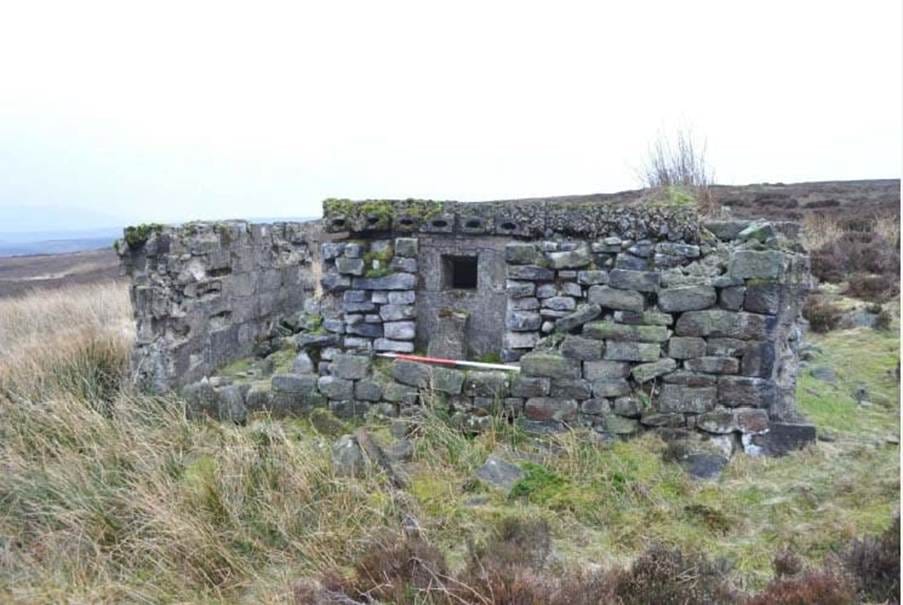
Ibbotson died in 1877 and doesn’t appear to have had any more legal trouble surrounding trespassers on his land. What I haven’t been able to ascertain is who owns Bradfield Dale today, if any one person does. The Earl Fitzwilliam title went extinct when the 10th Earl died in 1979. It is now a popular hiking spot and is still home to livestock. Brogging Moss, where the Oateses and Ibbotson fought, is now home to a dilapidated grotto used by the military in WWII. Fortunately, today you can travel to the spot, and presumably pick wild fruit without being cudgelled or fined for trespassing.
178 years later
One thing that has struck me while researching this event is how it isn’t just the land we’ve lost, but the knowledge of it. Today, foraging is seen as a quaint and slightly eccentric hobby. I dabble in it myself and I’ve had some weird looks from people, most recently when I was gathering elderberries outside my local branch of ASDA. I suppose we should be grateful that families like Hannah Chapman’s no longer have to travel to the moors and pick berries for their survival or risk prosecution for poaching, though using food banks is also inadequate when you have four hungry children to feed.
Reports indicate that more and more people are resorting to foraging in the UK simply to avoid malnourishment, but it is difficult enough for a single person to supplement their diet this way. With so much of our land enclosed, where would hungry families be able to gather enough to make up for what they already lack? Where would they find the time between school and work? More than that, the knowledge gap would be potentially deadly – does the average person in Britain know a field mushroom from a death cap? A juniper from a rowan? An inedible conker from a chestnut? When and where would they obtain this knowledge?
In both of these trials, the bench acknowledged the vital importance of bilberry season for the local poor and the long-standing tradition of gathering the fruit. I have spent my entire life in the North of England, much of it in the countryside, and I had never even heard of bilberries until I picked up The Forager’s Calendar. Much of British folklore and culture tied to the plant life and landscape of these islands has been lost due to corporate environmental damage, enclosure, and property laws that only serve the rich and powerful. The secretive landowners that keep us from nature have done far, far more to damage long-standing folk practices than the immigrants who dare to live their lives without celebrating Christmas and Bonfire Night; yet it is immigrants that are demonised as ‘invaders’ who are ‘replacing’ British people.
Whether Jehu Ibbotson was simply a farmer protecting his assets or a man who used brute force to drive the desperate poor from the bilberry bushes that happened to grow on his land, he still used his wealth to put an end to a traditional means of self-sufficiency. His complaints of the game birds he planned to shoot for fun being stolen and sold also are hard to sympathise with when you remember the families sleeping on damp straw in the city below his moor. Right-to-roam laws have improved access to nature, but by the time of the 1932 Kinder Trespass, where activists defied landowners to ramble through the countryside, many of the customs our ancestors built their lives around had already been wiped out.
Enclosure didn’t just put barriers around the land; it reshaped it forever. Grouse moors were ravaged of anything that threatened the ground nesting birds. Predators that threatened livestock were made extinct, forever upending the food chain. Ancient forests were destroyed to make way for intensive farming. In just 28 years of the early 20th century, as much woodland was removed as had been in the previous 400. The Lake District, where I grew up, is known for its endless fields of grazing sheep and cattle which are very much man-made and industrial, but it still has a reputation as a haven for nature. Wildlife populations have been decimated, including insect numbers. The Britain the Romans came to would be unrecognisable to modern Britons. For most of us in the country today, our labour still remains our only true asset. Guy Shrubsole’s book, Who Owns England? highlighted just how extensive and secretive the seizure of the land we stand on has been.
What choice do we have but to take the job in the Amazon warehouse? What other means do we have of feeding ourselves? The modern welfare state has saved us from the threat of the workhouse, but with unions decimated, wages stagnant, a rising cost of living, and the looming threat of rough sleeping, I would argue we need to get serious about who gets to access the land and who does not. John Woolhouse, the Oateses, Hannah Chapman, and the rest of the bilberry pickers could be found today in food banks, job centres, and courtrooms. Jehu Ibbotson lives on in landlords trying to find a loophole that allows them to refuse welfare recipients as tenants. Thanks to radical, targeted trespass, you can pick berries on Bradfield Dale today, but we have a lot more work to do until all the land belongs to all of us again.
References
Wright, J. (2020). Forager’s Calendar: a Seasonal Guide to Nature’s Wild Harvests. S.L.: Profile Books Ltd.
Hatfield, J.E. (2002). Continuity and change in a Pennine community: The township of Stannington c.1660 - c.1900. [PhD Thesis] pp.43, 81, 112. Available at: https://etheses.whiterose.ac.uk/id/eprint/14721/ [Accessed 8 Sept 2026].
Meeting Resolutions from the January 1827 meeting of the Society for Bettering the Conditions of the Poor in Sheffield. (1827).Miscellanea. [Archive item] Sheffield City Archives, 51 Shoreham Street, Sheffield. Available at: https://sheffield.access.preservica.com/uncategorized/IO_a1c9d528-2411-485d-b68c-6de89b954a8d/ [Accessed 2 Sept. 2026].
Thompson, E.P. (2013). The Making of the English Working Class. London: Penguin Books, p.243.
Marx, K. and Mclellan, D. (1999). Capital. Oxford: Oxford University Press.
Lazenby, P. (2025). How workers fought US slavery and earned Abraham Lincoln’s gratitude. [online] Morning Star. Available at: https://morningstaronline.co.uk/article/how-workers-fought-us-slavery-and-earned-abraham-lincoln%E2%80%99s-gratitude [Accessed 8 Sept. 2026].
Unknown (1848a). Town Hall. Sheffield Independent. 22 July. News Coverage of Local Criminal Cases.
Shrubsole, G. (2019).Who owns England? : How we lost our green and pleasant land, and how to take it back. London: William Collins.
Unknown (1839). Nominations for Guardians of the Poor. Nominations for Guardians of the Poor. [Archival Record] The Bradfield Archives, Mill Lee Rd. Low Bradfield, 26 6LB. Available at: https://bradfieldarchives.co.uk/archive/nominations-for-guardians-of-the-poor/1823488- [Accessed 3 Sept. 2026].
Chelveston-pc.gov.uk. (2024a). Overseers of the poor. [online] Available at: https://www.chelveston-pc.gov.uk/overseer-of-the-poor [Accessed 8 Sept. 2026].
Unknown (1845). Bradfield Association for the Prosecution of Felons Notice. Bradfield Association for Prosecution of Felons 1833 - 1857. [Archival Record] Bradfield Archives, Mill Lee Road, Low Bradfield, Sheffield S6 6LB. Available at: https://bradfieldarchives.co.uk/archive/prosecution-of-felons/public-notices-re-felons/1824354-43066?q=jehu%20ibbotson [Accessed 9 Mar. 2026].
Sutton, J. (2004). Protecting privilege and property: Associations for the Prosecution of Felons. The Local Historian, 34(2), pp.89–104.
Unknown (1848b). Town Hall. Sheffield Independent, 12 Aug.b, p.1. News report covering criminal cases.
1871 Census, Bradfield Parish. (n.d.). [Census Record] Public Record Office, London.
Macneill, M. (n.d.). Festival of Lughnasa: a study of the survival of the Celtic festival of the beginning of harvest. Folklore Of Ireland Council.
Ciara Houghton Ruane is an independent author of two fiction books, Annunciation and Who Steals the Common from the Goose?. You can follow her on Instagram @ciaratheauthor or visit her website at ciaratheauthor.org to buy books, read more of her non fiction, and hear about upcoming projects.
Printed copies of this article will be available at the Manchester and Salford Anarchist Bookfair on October 31st, 2026. To access a copy, please contact Ciara.


Comments ()