

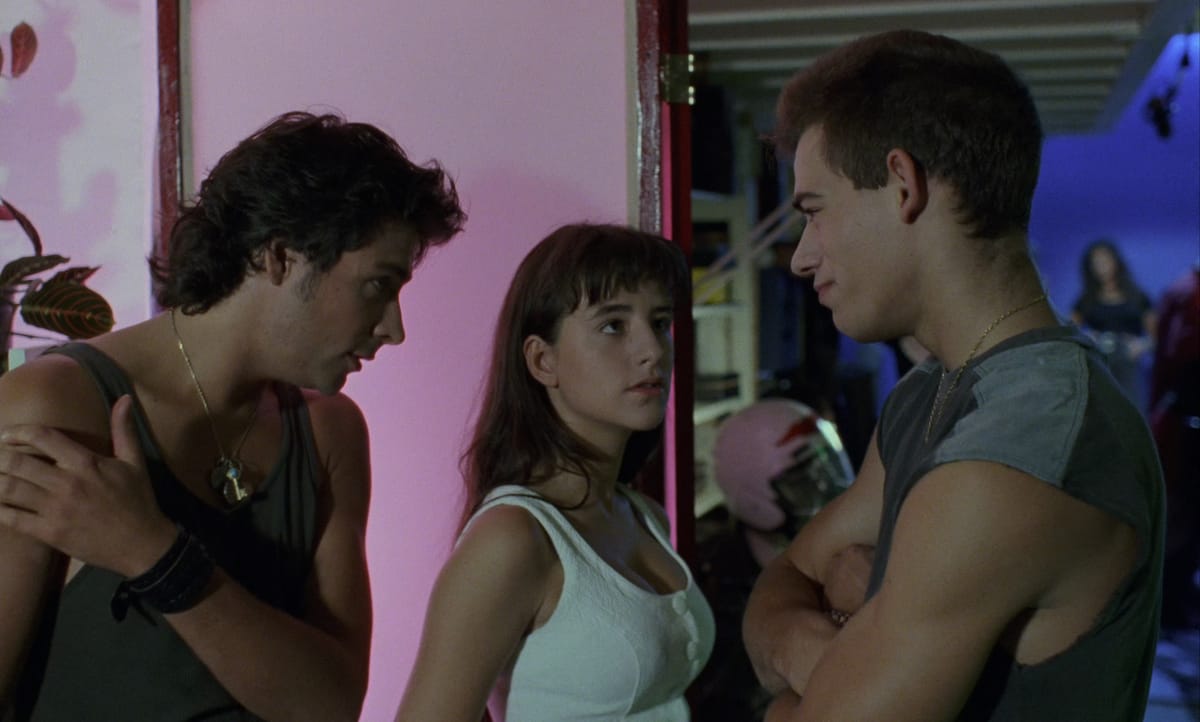
Sam Button interviews Dr Jacob Engelberg on his new book, Cinemas of Bisexual Transgression. The book argues that the way we look at queer film centres the gay/straight binary and considers what happens when bisexuality breaks the rules.
Interviewed by Sam Button (Interregnum)
Sam Button (SB): What was the genesis of the book?
Jacob Engelberg (JE): During my postgraduate studies, I learned about bisexual theory. This is a minor critical tradition that emerged in the wake of queer theory. It challenged queer theory’s neglect of bisexuality, but maintained the emphasis on thinking critically about sexuality.
Prior to that point, as a bisexual-identified man interested in film, I think I had a somewhat naïve approach to representation where I had kind of assumed that all formations of sexuality were equally representable and that we needed ‘more bisexual representation’. Bisexual theory taught me to think more critically about the presuppositions such a position takes, namely that all formations of sexuality are equally depictable and intelligible. Instead, I had to think about how we even come to recognise sexuality in the first place. I explored this in more detail in my doctoral studies as a film scholar, where I looked at the affordances of a bisexual theoretical approach to cinema.
SB: What is the main argument the book is trying to make?
I suppose there are two central arguments I’m proposing in the book. The first is that queer film studies has for too long operated with the implicit reference point of cisgender homosexuality: its figures, its cultures, its semiotics. I argue that this tendency has limited the potentials of what queer film studies might be. One way to expand this practice, I suggest, is to look to figures whose excessive desires render them unintelligible within the dominant gay/straight binary. This work involves putting down the dominant interpretive frameworks through which sexuality tends to be read on screen and attending, instead, to those moments where bisexual possibilities come into view.
The second argument the book makes is that bisexual possibility regularly emerges on film in contexts of transgression. Here, transgression is taken to mean instances where we see challenges to, or contraventions of, various rules or systems. This tendency has already been noted in much bisexual media criticism, but this criticism generally takes the approach of an anti-stereotype or ‘bad representation’ framing. This supposes that images of bisexually desiring figures behaving badly are somehow harmful for bisexual people in the world. I don’t buy that argument, which assigns a kind of political truth-value to images. This is something that critical film and media studies has warned against, but which still has some purchase in more behavioural psychology-informed communication studies.
Instead, I suggest it’s more useful to analyse these cinematic figures: the havoc they wreak, the thrilling sense of danger they elicit, their often disturbing violations of moral codes. My suggestion is that this analysis has much to tell us about the social organisation of sexuality, the relations between sexuality and the visual, and how sexual meaning-making is enmeshed with questions around gender, race, origin, ethics, political economy, and more.
I suppose central to this argument is an insistence on the value of looking to spaces of sexual ambiguity. Not in search of straightforward answers that we can deem as politically good or bad, but, instead, to explore how cinema has attested to the insufficiency and instability of the dominant sexuality binary and the dangerous thrill of its destabilisation.
SB: Why the term ‘bisexuality’? How does your work conceptualise this?
JE: The book uses the term ‘bisexual’ capaciously – it’s not a term I’m married to, and I certainly don’t deploy it as desire towards ‘two genders’. I find it useful, however, as it has operated as the most popular term through which the capacity to desire people of more than one gender has been articulated across the past twelve decades or so. Through it we can index various cultural and political contexts in which bisexuality has been discussed, the ways it took on meaning in relation to, for instance, lesbian feminism, the AIDS pandemic, psychology, etc. In this way I find it useful. It should also be mentioned that, at least since the 1980s, bisexual organisations have worked to redefine bisexuality away from its etymological roots in ways that contest the sex and gender binaries.
Still, if it’s not a term people can get on board with, hopefully they might nevertheless find it useful to think about the phenomenon of desire towards people of more than one gender as being an important but underexplored aspect of sexual cultures and politics.
SB: Why did you choose the films that you did?
JE: Determining which films to look at is always a painful process of exclusion for me, but there’s no escaping it. In establishing a body of work for this project, I wanted to draw upon socio-political contexts in which bisexuality was being discussed, so I ended up looking at films released between the 1970s and the 1990s.
There is also a history of knowledge being produced about sexuality that I wanted to trace. Ideas around what sexuality is emerged in the West in contexts of colonial travel writing and race science, medicine and sexology, psychoanalysis and psychology. I therefore focused primarily on Western European and North American films upon which the fingerprints of these ideas are most apparent. Of course, these ideas travelled, and continue to circulate in unpredictable ways globally, but this focus allowed me to trace a very specific history.
I knew, however, that I wanted a significant amount of contrast between the different films that I looked at, as I sought to follow a cinematic-sexual phenomenon across disparate cinematic spaces. So, the book has four central chapters, each of which looks somewhere different: so-called ‘lesbian’ vampire cinema of the 1970s, lesbian narrative cinema of the 1980s and 1990s, European art cinema depicting male bisexuality in the wake of the AIDS crisis, and erotic thrillers predominantly from the 1980s and 1990s. I find each of these spaces fascinating, with each telling us something unique about the alignment between bisexuality and transgression on screen, but also, together, revealing perhaps unexpected points of continuity in bisexuality’s representation and function across different generic, industrial, or national contexts.
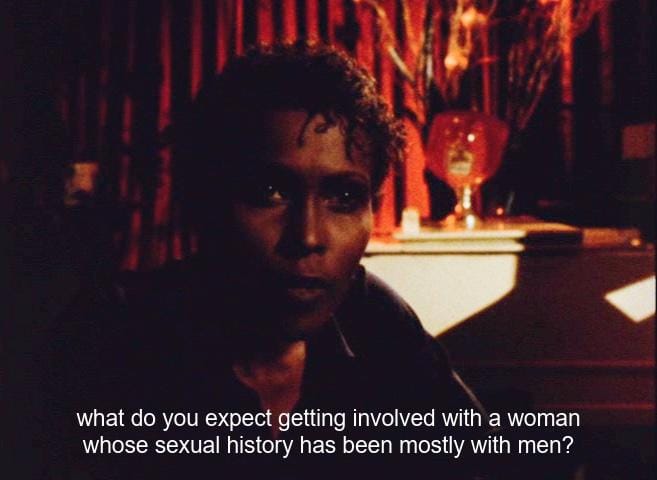
SB: In what ways do the examples of films that you select challenge the idea that sexuality means that you can only be attracted to one gender (monosexism), or heteronormative narratives of cinema?
JE: Their ways of doing this are varied. Two aspects that are important here are the ways films manage space and time. When it comes to expressing a film figure’s sexual desires, cinematic space often carries with it associations of object choice. For instance, in one film I analyse, Savage Nights (1992), we see the central figure in traditionally heteronormative spaces — having a romantic dinner with his female partner, playing house with her, etc. — but we also see him in male cruising spots and in a gay bar. The way the film moves between these spaces establishes their non-exclusivity; it attests to how spaces that are usually treated as separate have always been populated by those who transgress their borders.
Central to this being communicated on film are approaches to editing, and Savage Nights is an example of a film which puts scenes in spaces of divergent sexual demarcation next to each other. This, of course, also involves the management of time. In narrative cinema, both heteronormative and much gay film tends to favour a linear approach to time, where someone’s sexual ‘becoming’ is understood in retrospect from where they end up. The follies of youth can be disregarded as experimentation or immaturity, and the weight of the narrative ending can carry with it the conveyance of the truth of the character’s sexuality. Many of the films I look at play with time in a way that refuses such a straightforward approach to narrative.
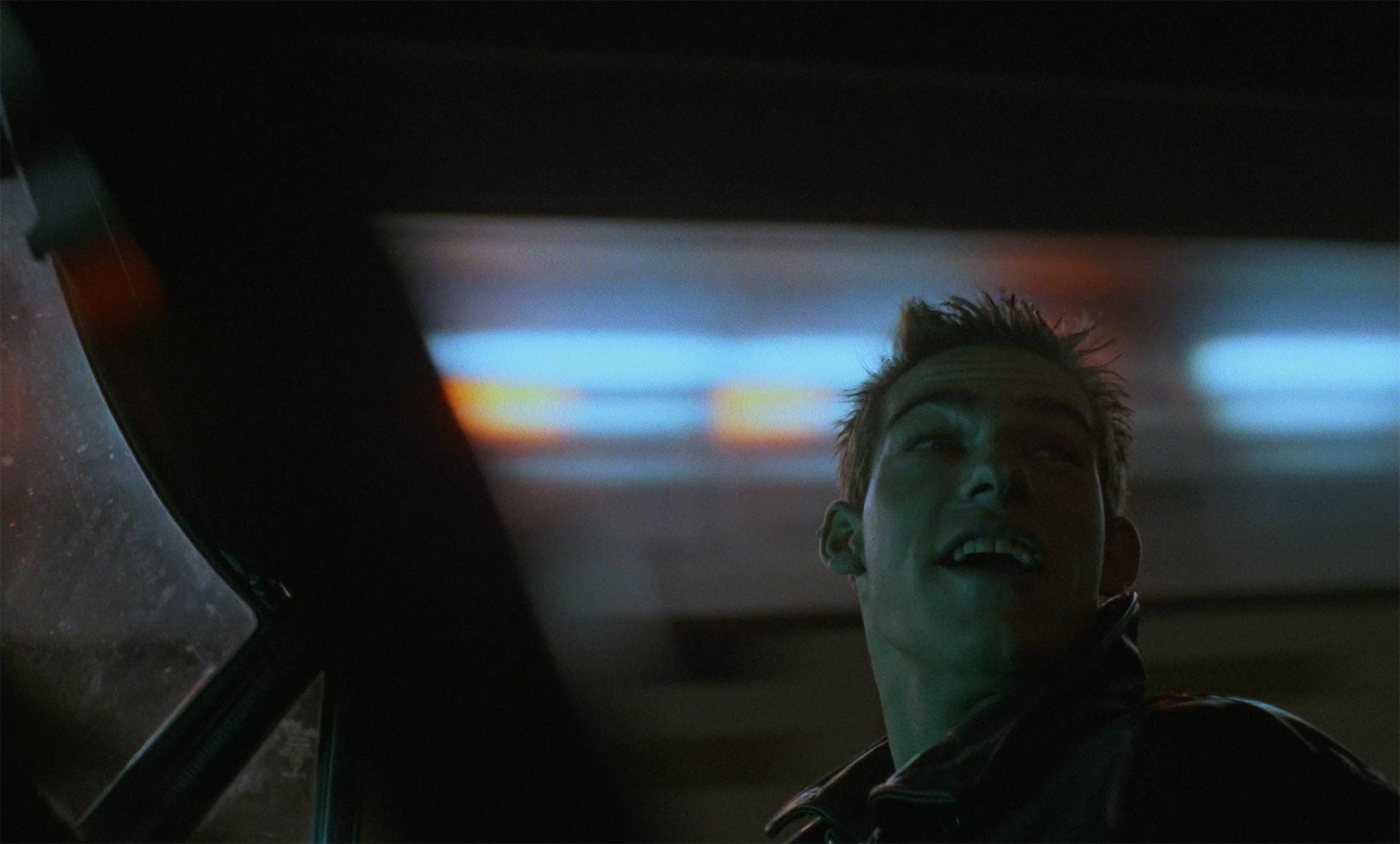
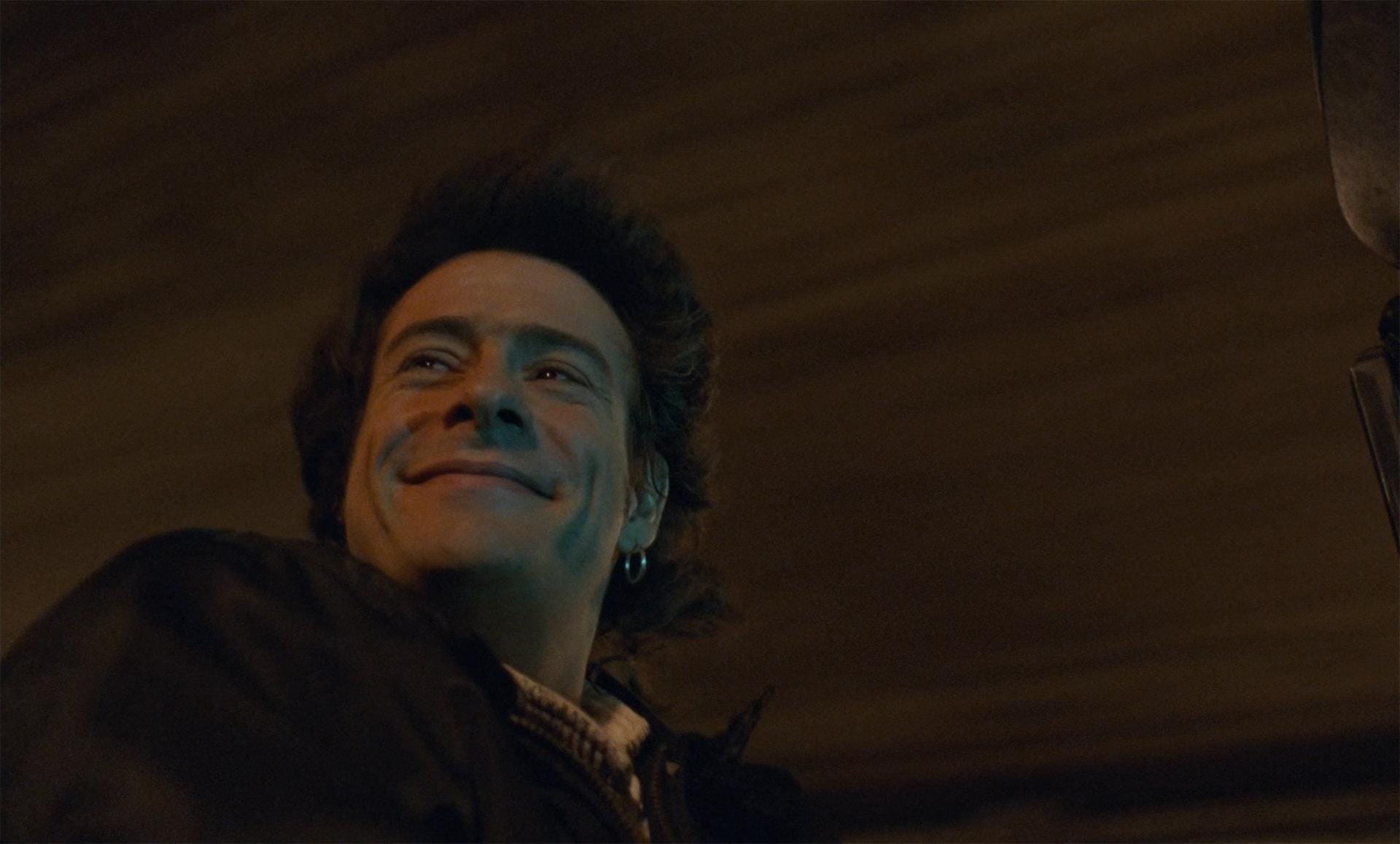
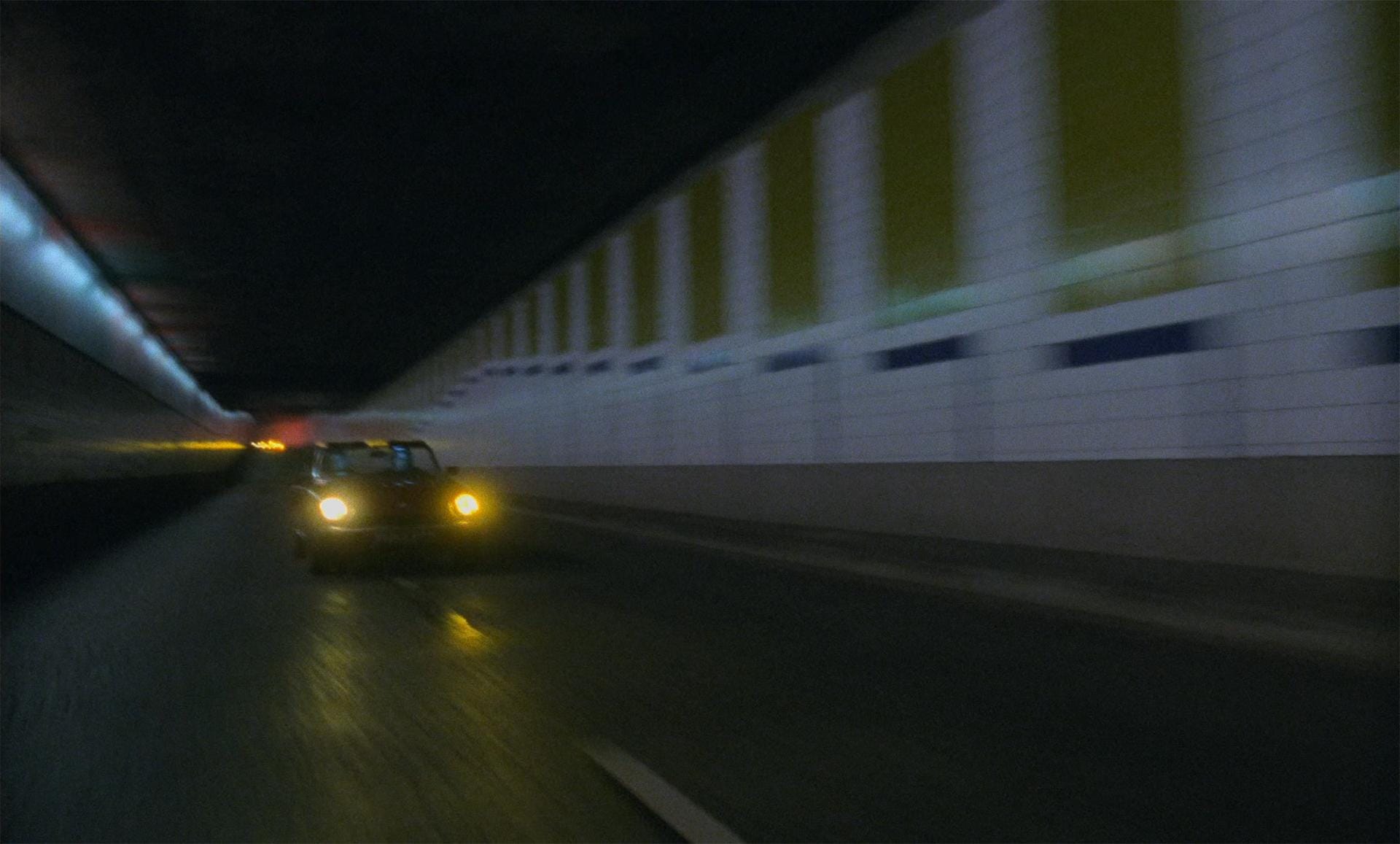
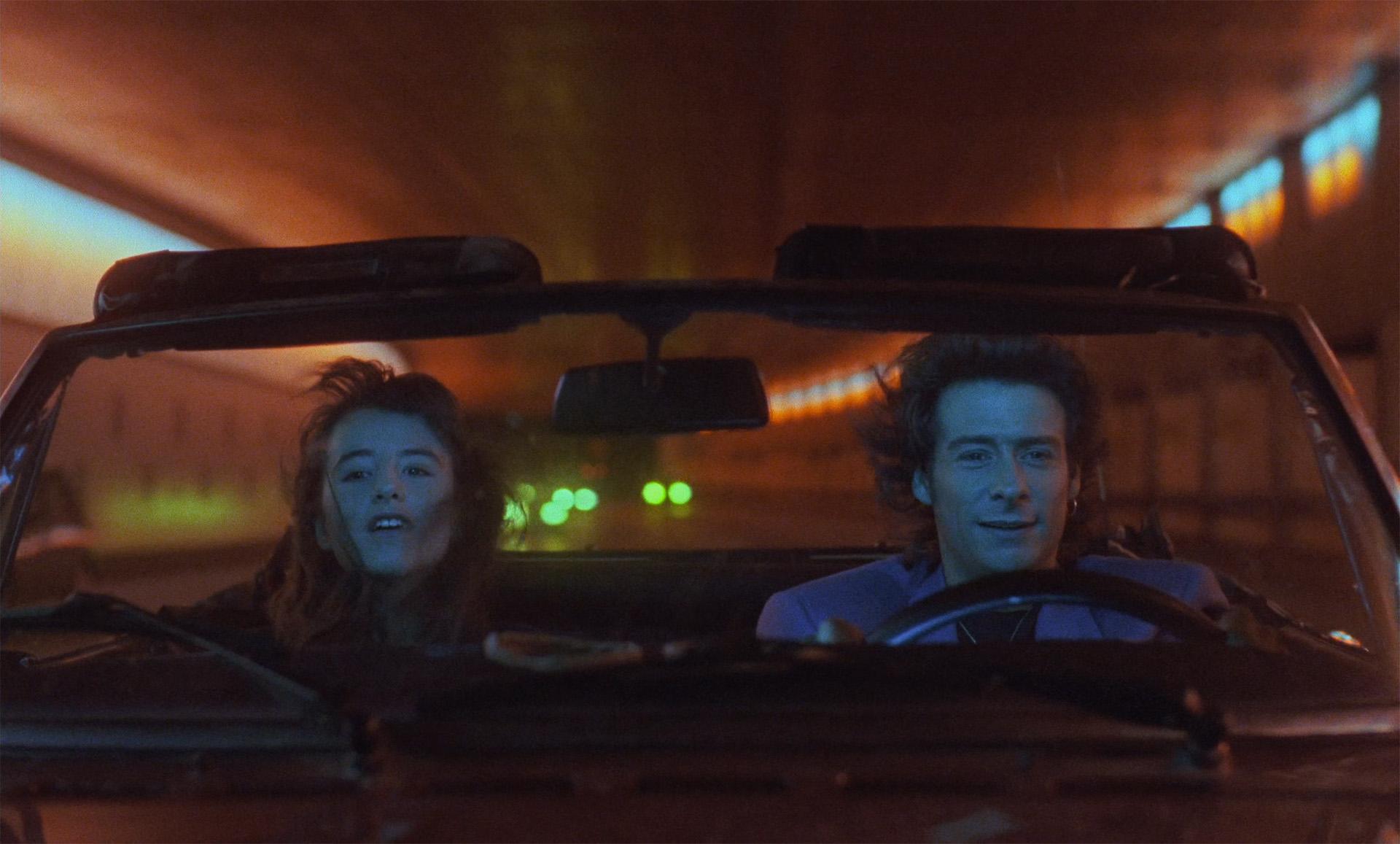
Again in Savage Nights, there is this striking moment in which the central character Jean is driving through an underpass with his male partner, seen in shot-reverse shot. The film cuts to a longer shot as the car speeds through an underpass. We then cut back to a frontal two-shot, and Jean is now driving his female partner [see below]. This non-naturalistic approach to the management of time and space works to undermine those more linear approaches to spatiotemporality that naturalise monosexuality (attraction towards people of only one gender).
I should also note that while I mainly look at narrative film, another answer to your question might propose the amenability of non-narrative film — particularly avant-garde and experimental film – for challenging dominant monosexist and heteronormative conventions. In the work of avant-gardists like Enrico Cocozza, Edward Owens, or Midi Onodera, for instance, the laws of narrative comprehensibility are not prioritised, so space can be given, instead, to desire’s messiness and incomprehensibility, its unpredictability too. I find these particularly meaningful values in relation to bisexuality.
SB: Let’s talk more about time. What is bisexuality’s relationship to time? Is there a primacy to the way that certain relationships are portrayed and does this lend itself to certain monosexist assumptions? For example, in Call Me By Your Name (2017) does the establishment of a prior heterosexual relationship (we see Elio have sex with a woman before his relationship with a man) create a bisexual representation, or does it cement a monosexual reading of the film that bisexuality is a transition to being ‘really’ gay?
JE: I think the important thing to remember here is that there is no formula that can make a film definitively bisexual. There will always be different meanings taken from interactions between texts and spectators. This being said, it doesn’t mean that it’s an interpretive free for all. Hermeneutics (the theoretical and methodological study of interpretation) teaches us that good interpretation has a limited set of possibilities. The films that are more amenable to bisexual reading tend to involve depictions of a character’s multiple desires, and these tend to be organised in a way that resists the (monosexual) tendency to present the final desire as the ‘true’ desire.
Still, in the book I argue that there’s a great deal more films that are open to bisexual meaning than might otherwise be assumed. Call Me by Your Name is a great example of that, and I’ve written about it elsewhere. The dominant tendency is to devalue the film’s presentation of Elio’s desires towards Marzia (as well as Oliver’s towards Chiara!). Viewers are familiar with narratives of the closet, and this familiarity can lead to reading the socially taboo desire as the authentic one and the socially acceptable one as feigned (this is also what happened with Brokeback Mountain). But such readings lean heavily on the prioritisation of heterosexuality and homosexuality as knowable formations of sexuality; in doing so, they wishfully pave over or circumvent the sexual ambiguities present in the text that might complicate gay or straight interpretation.
One of my suggestions is that if we stop prioritising monosexuality in our approach to reading sexuality on screen, we find ourselves with a broader set of films that are potentially amenable to bisexual reading. This flips on its head the accusation of cinema not having ‘enough bisexual representation’ suggesting, instead, that the issue might be film viewers’ implicitly monosexist approach to interpreting screen sexuality.
So, to return to your question about time and Call Me by Your Name, I would say that the film’s centring of the relationship between Elio and Oliver, the fact that it’s afforded more screen time, and that the film ends with the pain of the relationship ending should not mean that we disregard these characters’ relations with women. A bisexual approach to reading the film would find meaningful the totality of these characters’ desires. It would acknowledge the pain of the central relationship’s unrealisability – and the role that homophobia plays in this – without needing to impose familiar narratives of gay closetedness on a film that suggests a greater complexity in these characters’ sexualities.
SB: If there was one film that you think best demonstrates what you want to articulate about bisexual cinema, which is it?
JE: My favourite example to use, as it’s the most popular of the films I analyse in the book, is Basic Instinct (1992). This is a film that met with fierce protest as it was being developed, shot, and after its release. Much of this opposition came from lesbian, gay, and bisexual activists who considered it objectionable that the film would have a bisexual murder suspect at its centre in Sharon Stone’s character of Catherine.
As you might have guessed, this is not a position I share. Instead, by revisiting the film, I consider how Catherine’s bisexuality becomes enmeshed with suspicions around her criminality. I also look at how her specific embodiment of the conventionally feminine, inordinately wealthy author cites contemporary debates around queer femininities, queer people’s incorporation into parts of the economy from which they were historically excluded, and questions of narrative authority. Rather than just reading ‘murder suspect = bad’, I ask what we might learn about sexuality and danger, knowledge and desire, through figures of bisexual transgression such as Catherine.
Although the Basic Instinct protesters sought to ‘ruin’ the film’s ending for cinemagoers, using signs that read ‘Catherine Did It’, close analysis of the film reveals that we are, in fact, left in the dark regarding who did what. The question of Catherine’s culpability in the murders of which she is accused is, importantly, left open.
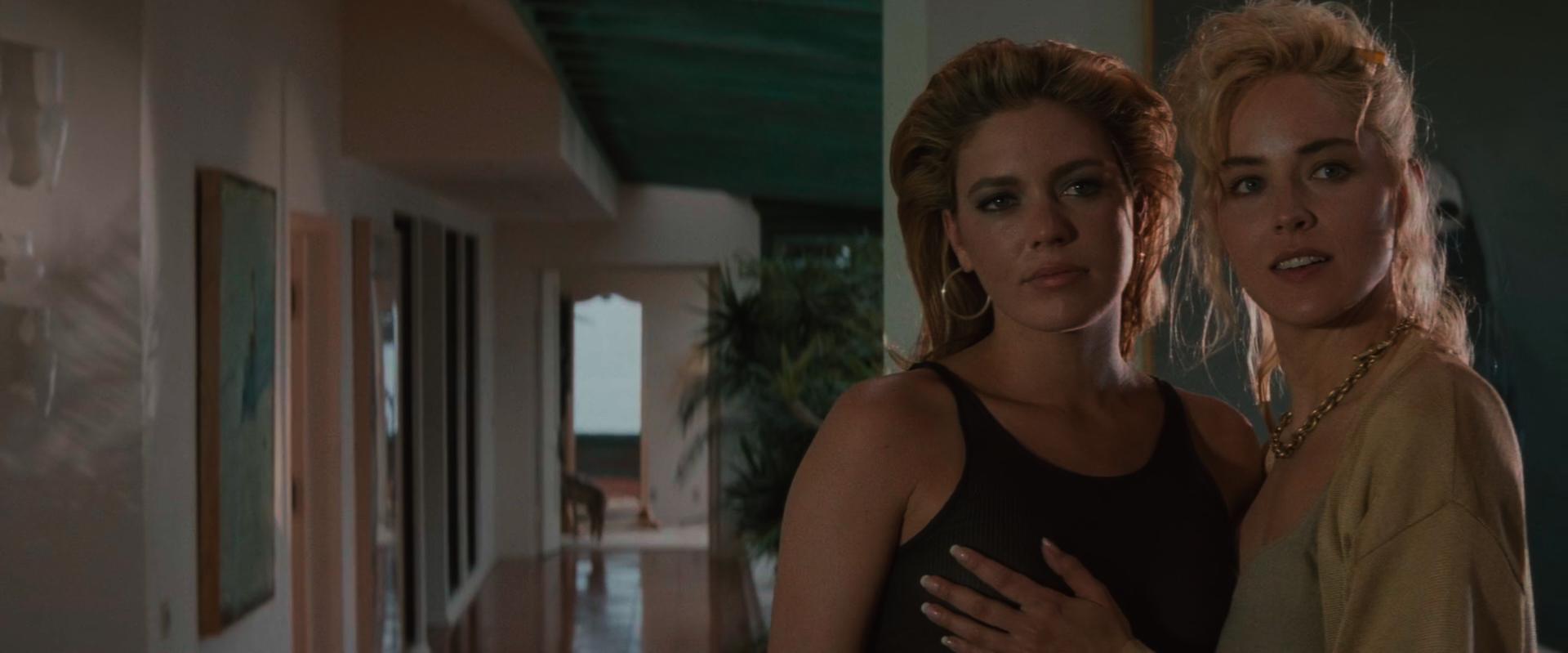
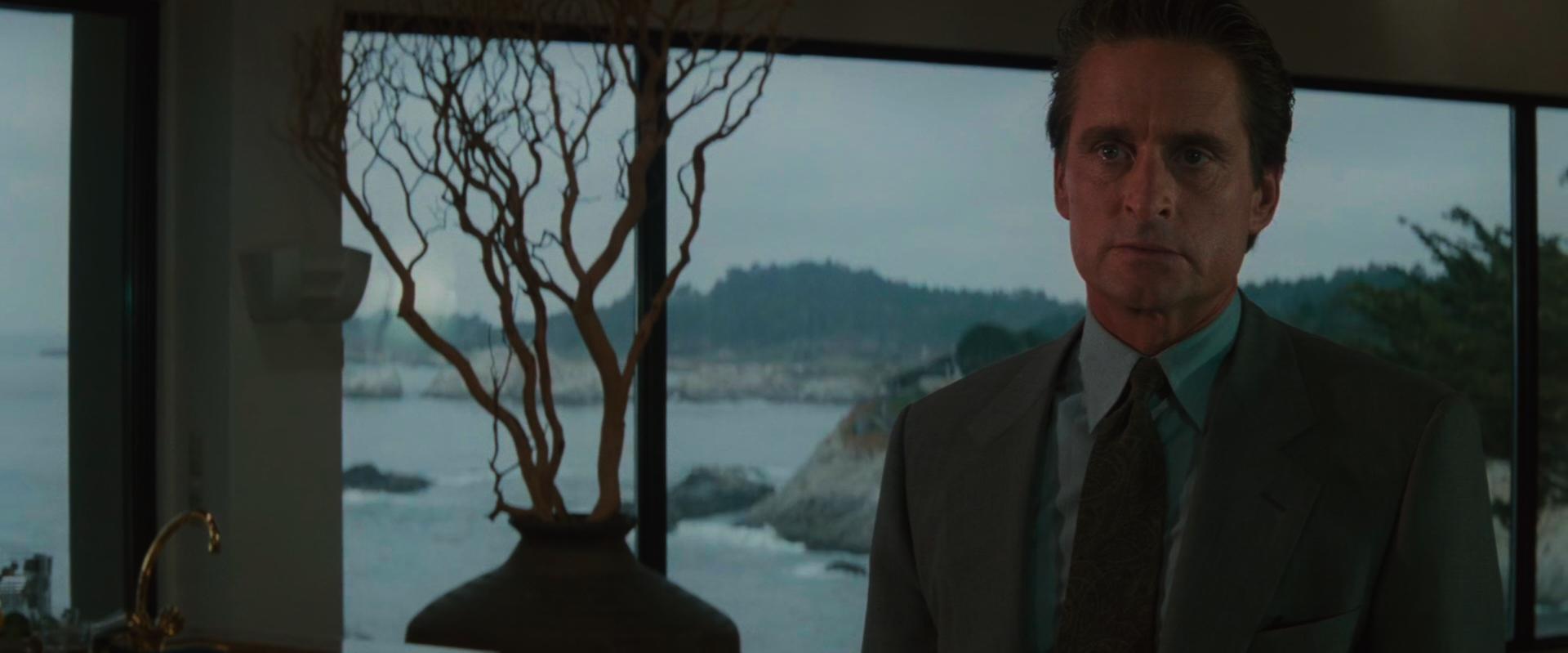
Like the bisexual desires that render her sexually unreadable to others (Michael Douglas’s chagrined look as he watches Catherine embrace her female lover is downright camp), Catherine’s criminality is equally difficult to pin down. These figures of bisexual transgression often play with our ability to say what we know simply from what we see, and nowhere is this more apparent than with questions of sexuality. That’s part of the reason I find them so valuable to thinking sexuality’s relation to the visual, and vice versa.
Jacob Engelberg is Assistant Professor of Film, Media, and Culture at the University of Amsterdam. He is the author of Cinemas of Bisexual Transgression (Duke University Press, 2026) and the editor of the special issue ‘Bisexuality and Pornography’ for the journal Porn Studies. His work has also appeared in the Journal of Bisexuality and several edited collections. He sits on the editorial boards for Porn Studies and Routledge’s book series Screening Cinema.

Comments ()