

Sam Button discusses the politics of industrial water consumption for the rollout of artificial intelligence, and explores recent international developments and resistance movements.
By Sam Button
It is difficult to imagine water as a finite resource. In fact, in our everyday vocabulary it is used to invoke such large quantities as to be almost limitless. Almost.
You may have heard of carbon footprint, but what is less discussed is a water footprint. This measure was invented by the late Arjen Hoekstra, and shows us the amount of water consumed by both people and industrial processes. It’s important to distinguish between production and consumption footprints: if we focus only on the water that people consume, we risk blaming individuals for industrial overuse.
Water is used in such a large variety of processes and products, and in such large quantities, that we may not be aware of the scale. For example, every litre of Coca-Cola produced requires 1.7 litres of water. The company has become an avatar for the patterns of aggressive, extractive capitalism that are linked to water exploitation. In the village of Plachimada in Kerala, after the opening of a Coca-Cola bottling plant, wells were contaminated, the water made people ill, and toxic waste was being discharged into the water supply. While the local resistance to Coca-Cola has become legendary in its success, leading to the closure of the plant, 13 years on villagers still did not have clean drinking water.
Almost one in ten people do not have easy access to clean water. War is a key driver of lack of access to water. Denial of access was used as part of the Israeli collective punishment of the Palestinian people in Gaza, with only 40% of Gaza’s drinking water facilities operational in 2025. In Sudan, whose conflicts are directly attributable to foreign power politics, already existing challenges in water provision and infrastructure are exacerbated by forced displacement of people affected by civil war. It is not exceptional circumstances that contribute to water scarcity: it is political decisions by rich and powerful countries that affect people on the margins. I am not talking about colonial history. The EU have recently agreed new mineral mine licensing in water scarce areas.
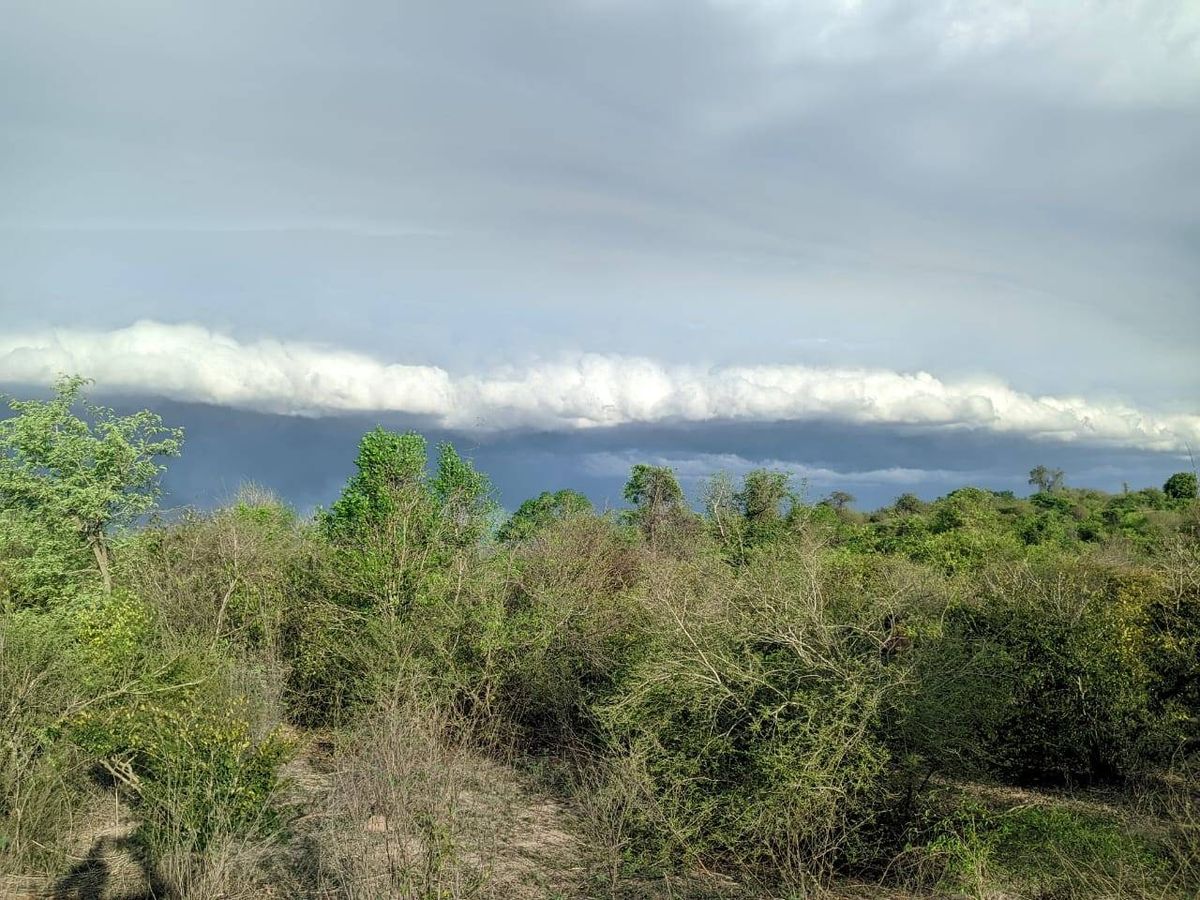
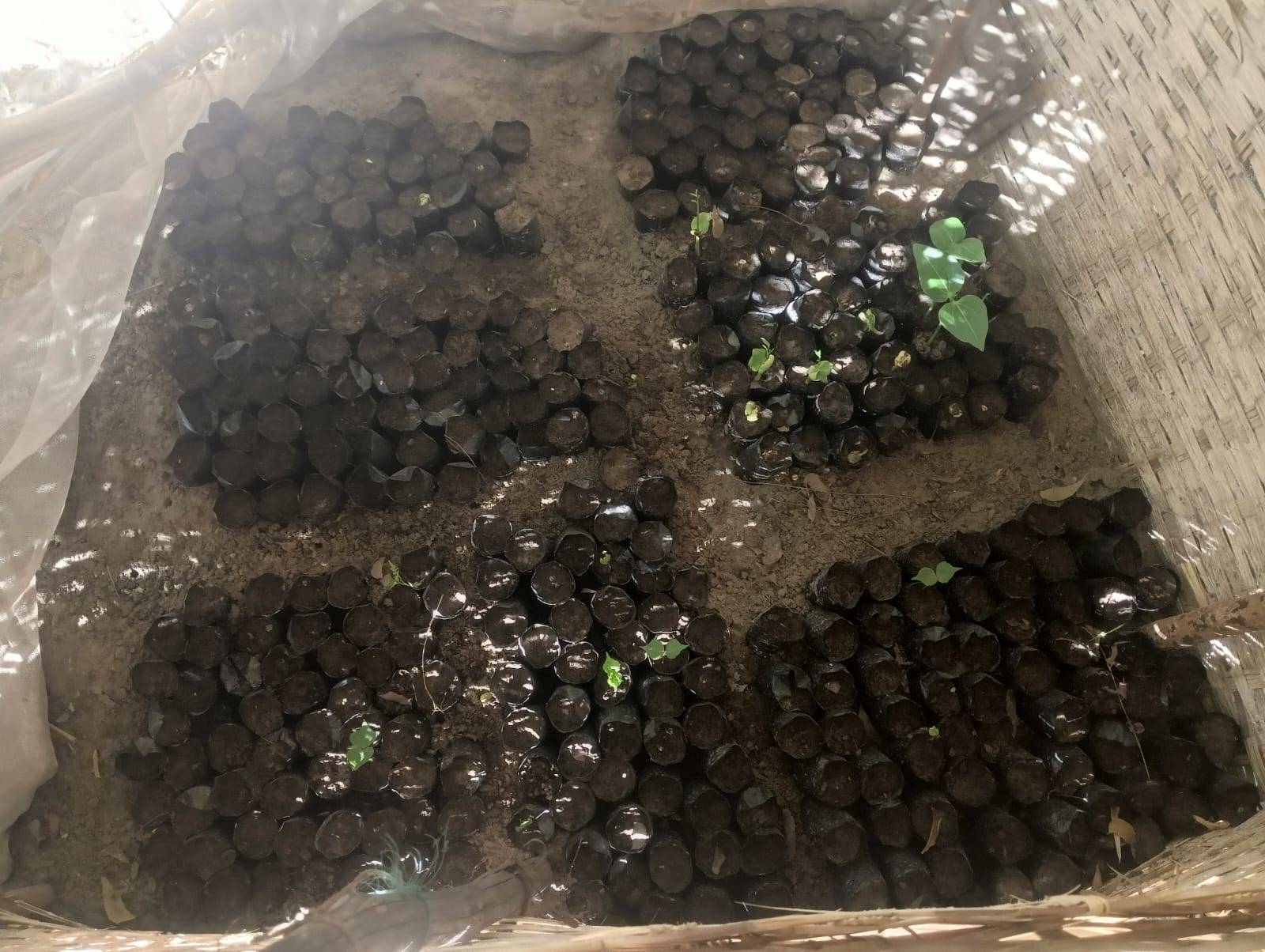
I witnessed some of the pressures that extractive capitalism puts on the global majority myself when I visited Madagascar last year. Peanuts are an important global export for Madagascar, which remains one of the poorest countries in the world. When I visited, my guide Soa explained that it was ‘the season of fire’, where many peanut farmers in Madagascar burn forests to create room for their cash crops. However, this practice lays the groundwork for desertification. As Soa put it, ‘if you destroy the trees it will not rain’. Soa has taken it upon himself to reforest areas of land that would otherwise be used for cash crops such as peanuts.
Soa explained his motivations for reforesting local land:
I am dedicated to planting trees so that there will be no drought in the region where my family lives. Because without rain, there might be no clean water, which could cause many illnesses. Therefore, we are doing our best to ensure they have a clean and peaceful environment. And if the rains come, the fish population will likely grow, bringing stability to everything. This will also allow people to cultivate well on lands that were already used in the past, so they don’t have to touch or disturb the remaining protected areas.
Madagascan peanuts have just been granted export access to the Chinese market, which will only strengthen demand. This makes the work that Soa is doing all the more vital. While I was there, there were large scale protests for, amongst other basic necessities of life, access to water.
I have a confession to make. In a predictably postmodern twist, the inspiration for this essay came from a piece of fake news. Jeff Bezos did not say that humans will have to cut down on their water consumption to fuel AI. However, if he were being honest, perhaps he should have.
It is impossible to discuss AI without discussing its environmental impact. AI and data centres now rival entire countries in terms of their levels of pollution, energy and water consumption. The average data centre uses 300,000 gallons of water a day, enough water to satisfy 600,000 people’s daily intake. Data centres in the UK are set to more than triple in terms of their energy consumption, from 1.6 Gigawatts (GW) to 6.3 GW by 2030. According to a UK Government report, the UK already faces a projected daily water deficit of nearly 5 billion litres by 2050 and there is no plan in place by water companies to account for demand by AI data centres. Water companies in England are still privately owned, literally pumping human shit into England’s largest natural lake. In a recent exposé in the Guardian, a planned data centre in a Scottish village has no prospect of meeting its greenwashed renewables commitments. This is part of the UK Government’s push for ‘AI Growth Zones’, ironic given the energy and water commitments necessary for such projects, which are more like ticks sucking the life from the landscape.
One might say, ‘I do not use AI, therefore I am not contributing to demand’. Personal choice on AI is becoming increasingly irrelevant, as it becomes integrated into our everyday digital lives, the search engines we use, our emails, our messaging apps, what we watch on TV. No matter how many AI settings you opt out of, decisions about the funding and proliferations of such projects are being taken in your name by your so-called representatives in government.
What’s more, AI is not good at what it promises to do. Our futures are being staked on the imaginations of tech billionaires, and the capital they are currently deriving is based on illusory hype. These companies are not even profitable. Our planet is not even being sacrificed for the sake of increased shareholder value, but on the possibility of potential returns. Thus we see the aggressive manufacturing of demand for AI: there are even studies with such dystopian titles as Confronting and alleviating AI resistance in the workplace. Was this study written by AI itself or The Borg?
Resistance is not futile, however. Communities across the world are coming together to fight the expansion of data centres. Friends of the Congo are exposing the highly exploitative mineral extraction on which the AI industry depends. In Uruguay, Digital Citizen are campaigning against a new Google data centre. On the New Mexico border, local groups and environmental campaigners are challenging Open AI’s hyperscale ‘Project Jupiter’ – presumably named because it plans to make this planet uninhabitable. In London, Brick Lane residents want more affordable homes, not an AI data centre.
The tide does appear to be somewhat turning on AI in the UK, with the Scottish Government considering a moratorium on new data centres. It feels as though people are not willing to tolerate technologies that promise much but offer little. The Scottish Government’s ‘pause’ on building data centres seems to indicate that even some politicians think that AI is a bubble that is about to burst. The industry itself is already talking in self-protective terms, with security briefings warning that anti-AI sentiment could turn violent. AI is a paranoid and delusional industry built on the unsustainable imaginations of fascists.
Let’s be under no illusions: the climate emergency is going to have huge economic, social and political consequences. Just as data centres need water to cool them, the planet uses water to cool itself. However, the circulation of heat within the ocean is slowing down due to melting ice. Ocean surface temperatures are at their highest ever. Huge numbers of people are already having to migrate due to climate catastrophes. Current policies are not going to be enough to stop these catastrophes. Fortress Europe is winding up the drawbridge, with the EU Parliament passing some of its most restrictive immigration policies ever, disgustingly cheered on by right-wing MEPs. Our politics has been reshaped by the fascist tech elite to account for the coming upheaval. The climate catastrophe is caused by a select few companies and will affect the global majority most severely. This isn’t simply a case of kicking away the ladder for countries seeking economic development: this is more like setting fire to someone’s house and then locking them inside.
To conclude, I would like to note that climate nihilism only benefits the techno-oligarchy. It is their pipe dreams of infinite growth that are leading us to ruin. Degrowth has become a growing movement to re-orient our economy and society to promote social and environmental justice. Thomas Piketty, one of the world’s most influential economists, has spearheaded the Global Justice Report, which ‘traces an economically and ecologically consistent transition path from 2026 to 2100’. These changes are possible. We must practice hope as a discipline as a counterweight to doomerism. Global solidarity is what is called for. Earth Strike is a global grassroots movement calling for general strikes to disrupt the capitalist institutions that are driving the ecological crisis. Local resistance can be successful, as the AI Resist List and the Plachimada struggle demonstrate. Demands for climate justice don’t have to be a drop of water in the ocean.
For more information
The AI Resist List is an invaluable resource mapping global resistance to AI projects.
Is AI Profitable Yet? Lays bare the scale of the economic black hole that AI has ripped open, including a real time amount of money being spent since opening the page. An eye opener to see what the industry is willing to spend on rather than solving social and environmental problems.
Georg Rockall-Schmidt’s series One Minute to Midnight lays bare the unfettered and unsustainable resource extraction that contemporary capitalism depends on.
Sam Button is a writer and editor for Interregnum.
Without your support, Interregnum dies.
Interregnum will always be free for everyone to access, but we are a small collective. All labour on this platform is voluntary, and we have running costs. Becoming a paying subscriber, for just £3 a month, makes a big difference. You can begin supporting us by clicking the link below.



Comments ()